
Threatened Species Recovery and Reintroduction Programs
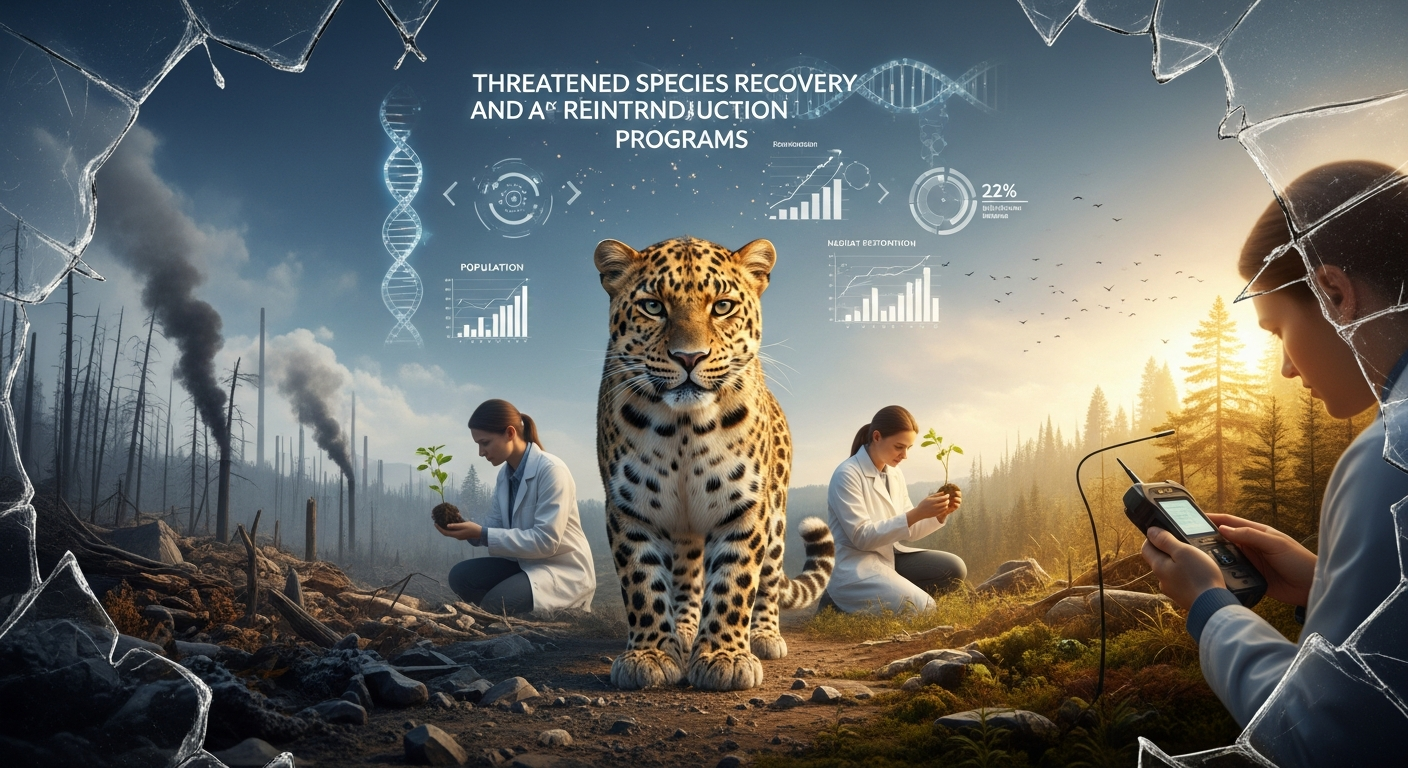
Course Title: Threatened Species Recovery and Reintroduction Programs
Executive Summary
This intensive two-week course provides a comprehensive framework for designing, implementing, and managing recovery plans for threatened species. Grounded in the IUCN Guidelines for Reintroductions and Other Conservation Translocations, the program equips conservation professionals with the scientific and strategic tools necessary to prevent extinction and restore biodiversity. Participants will explore the full lifecycle of recovery programs, from initial feasibility analysis and risk assessment to captive breeding, release techniques, and post-release monitoring. The course emphasizes the integration of biological data with socio-economic factors, ensuring that reintroduction efforts are ecologically sound and socially sustainable. Through case studies, simulation exercises, and expert-led workshops, attendees will learn to navigate the complexities of small population management and habitat restoration. Graduates emerge with the capacity to lead rigorous, evidence-based recovery projects that enhance institutional impact and contribute significantly to global conservation goals.
Introduction
The accelerating loss of global biodiversity demands urgent and sophisticated interventions. Merely protecting habitat is often insufficient for species already on the brink of extinction; active management, including species recovery and reintroduction programs, has become a critical tool in the conservation arsenal. However, reintroducing species into the wild is a complex, high-risk endeavor that requires a deep understanding of ecological dynamics, genetic management, and human-wildlife interactions.This course, *Threatened Species Recovery and Reintroduction Programs*, is designed to bridge the gap between theoretical conservation biology and practical field application. It targets professionals tasked with reversing population declines and restoring functional ecosystems. Over two weeks, participants will delve into the science of ‘small populations,’ learning how to mitigate genetic erosion, disease risks, and demographic instability. The curriculum rigorously covers the planning phase, emphasizing the necessity of feasibility studies, threat elimination, and stakeholder consensus before any release occurs.We utilize a blend of international best practices, specifically the IUCN Red List criteria and translocation guidelines, alongside regional case studies of both successes and failures. The training moves beyond biology to address the ‘human dimension,’ teaching participants how to navigate legal frameworks, secure funding, and manage community relations to mitigate human-wildlife conflict. By the end of the program, participants will be empowered to develop robust, adaptive recovery plans that stand the best chance of long-term success, turning policy mandates into tangible conservation outcomes.
Course Outcomes
- Design comprehensive species recovery plans aligned with IUCN guidelines.
- Conduct robust viability assessments and risk analyses for translocation projects.
- Implement best practices in captive breeding and genetic management.
- Develop effective pre-release conditioning and release protocols.
- Establish rigorous post-release monitoring and adaptive management frameworks.
- Manage stakeholder relations and human-wildlife conflict mitigation.
- Evaluate program success using quantifiable biological and socio-economic indicators.
Training Methodologies
- Expert-led lectures on conservation biology and genetics.
- Case study analysis of global reintroduction projects.
- Field simulation exercises for release site assessment.
- Population viability analysis (PVA) software workshops.
- Group projects to draft species recovery blueprints.
- Interactive risk assessment and decision-making matrices.
- Peer review sessions of participant action plans.
Benefits to Participants
- Mastery of international standards for conservation translocations.
- Enhanced technical skills in population management and monitoring.
- Ability to lead complex, multi-stakeholder conservation projects.
- Access to a network of conservation experts and practitioners.
- Practical experience with planning tools and feasibility studies.
- Improved capacity to secure funding through robust project design.
- Professional certification in threatened species management.
Benefits to Sending Organization
- Improved success rates of species recovery initiatives.
- Compliance with international biodiversity conventions and standards.
- Enhanced institutional reputation in conservation leadership.
- Increased capacity for scientific rigor in project planning.
- Better risk management and resource allocation for projects.
- Strengthened stakeholder relationships and community engagement strategies.
- Development of long-term, sustainable biodiversity strategies.
Target Participants
- Wildlife Managers and Park Wardens.
- Conservation Biologists and Ecologists.
- Zoo and Aquarium Curators (Ex-situ Management).
- Environmental Policy Makers and Regulators.
- NGO Project Coordinators.
- Veterinary Professionals in Wildlife Medicine.
- Natural Resource Management Researchers.
WEEK 1: WEEK 1: Fundamentals, Feasibility, and Ex-Situ Management
Module 1 – Principles of Species Recovery
- Introduction to conservation translocations and definitions.
- IUCN Guidelines and international legal frameworks.
- Understanding extinction drivers and threat analysis.
- The biology of small populations: Demography and genetics.
- Defining clear goals and objectives for recovery.
- The role of multi-disciplinary teams in conservation.
- Case study: Historical overview of species recovery efforts.
Module 2 – Risk Assessment and Feasibility
- Conducting habitat suitability assessments.
- Disease Risk Analysis (DRA) protocols.
- Socio-economic feasibility and cost-benefit analysis.
- Assessing climate change resilience of release sites.
- Biosecurity measures and quarantine protocols.
- Go/No-Go decision-making frameworks.
- Exercise: conducting a mock feasibility study.
Module 3 – Genetic and Demographic Management
- Managing inbreeding depression and genetic drift.
- Use of studbooks and pedigree analysis.
- Population Viability Analysis (PVA) basics.
- Metapopulation management strategies.
- Selecting founders for recovery programs.
- Genetic monitoring tools and techniques.
- Lab: Introduction to population modeling software.
Module 4 – Ex-Situ Conservation and Captive Breeding
- Role of zoos and breeding centers in recovery.
- Husbandry standards for threatened species.
- Breeding for release vs. insurance populations.
- Managing adaptation to captivity.
- Nutritional and veterinary care requirements.
- Record keeping and data management systems.
- Site visit or virtual tour of a breeding facility.
Module 5 – Pre-Release Planning and Conditioning
- Behavioral competence and predator avoidance training.
- Soft release vs. hard release strategies.
- Logistics of animal transport and handling.
- Acclimatization pens and site preparation.
- Health screening prior to translocation.
- Legal permits and regulatory compliance.
- Workshop: Designing a pre-release protocol.
WEEK 2: WEEK 2: Implementation, Release, and Adaptive Management
Module 6 – Release Implementation Strategies
- Timing and seasonality of releases.
- Release site selection and security.
- Strategies for supplemental feeding and support.
- Managing social structures during release.
- Contingency planning for immediate failures.
- Media management and public communication.
- Simulation: Executing a release operation.
Module 7 – Post-Release Monitoring techniques
- Radio telemetry and GPS tracking technologies.
- Camera trapping and non-invasive genetic sampling.
- Estimating survival, dispersal, and reproduction.
- Health monitoring of released populations.
- Data analysis for population trends.
- Evaluating habitat use and home range.
- Field demonstration of tracking equipment.
Module 8 – The Human Dimension and Conflict
- Community engagement and participatory planning.
- Human-wildlife conflict mitigation strategies.
- Education and awareness campaigns.
- Compensation schemes and incentive programs.
- Cultural significance and indigenous knowledge.
- Managing political and stakeholder expectations.
- Role-play: Stakeholder negotiation meeting.
Module 9 – Adaptive Management and Exit Strategies
- The cycle of monitoring, evaluation, and adjustment.
- Defining success criteria and exit strategies.
- Dealing with project failure and learning lessons.
- Long-term sustainability and funding models.
- Publishing results and knowledge sharing.
- Integrating recovered populations into wider ecosystems.
- Case discussion: When to stop a recovery program.
Module 10 – Capstone: Recovery Plan Development
- Synthesizing course concepts into a cohesive plan.
- Drafting the executive recovery strategy.
- Budgeting and timeline development.
- Risk mitigation strategy integration.
- Peer review of draft plans.
- Presentation of final recovery proposals.
- Course wrap-up and certification ceremony.
Action Plan for Implementation
- Select a priority focal species requiring recovery intervention within the organization.
- Complete a detailed feasibility study and Disease Risk Analysis (DRA).
- Establish a multi-disciplinary recovery team and stakeholder committee.
- Secure necessary government permits and external funding based on the plan.
- Implement the captive breeding or translocation operational phases.
- Initiate the monitoring protocol and standardized data collection systems.
- Schedule bi-annual strategic reviews to adapt management based on field data.
Course Features
- Lecture 0
- Quiz 0
- Skill level All levels
- Students 0
- Certificate No
- Assessments Self

You May Like

Advanced Population Ecology and Demographics
Course Title: Advanced Population Ecology and Demographics Executive Summary This intensive two-week course on Advanced Population Ecology and Demographics equips participants with advanced quantitative and...

Applied Conservation Genetics for Species Management
Course Title: Applied Conservation Genetics for Species Management Executive Summary This two-week intensive course on Applied Conservation Genetics for Species Management bridges the gap between...

Landscape Ecology and Connectivity Science Training Course
Course Title: Landscape Ecology and Connectivity Science Training Course Executive Summary This intensive two-week executive course on Landscape Ecology and Connectivity Science is designed to...

Biodiversity Hotspot Conservation and Management
Course Title: Biodiversity Hotspot Conservation and Management Executive Summary This intensive two-week course on Biodiversity Hotspot Conservation and Management equips participants with the knowledge and...

Advanced Habitat Assessment and Modeling Training Course
Course Title: Advanced Habitat Assessment and Modeling Training Course Executive Summary This two-week executive training on Advanced Habitat Assessment and Modeling provides environmental professionals with...




