
Restoring and Managing Riparian Zones Training Course
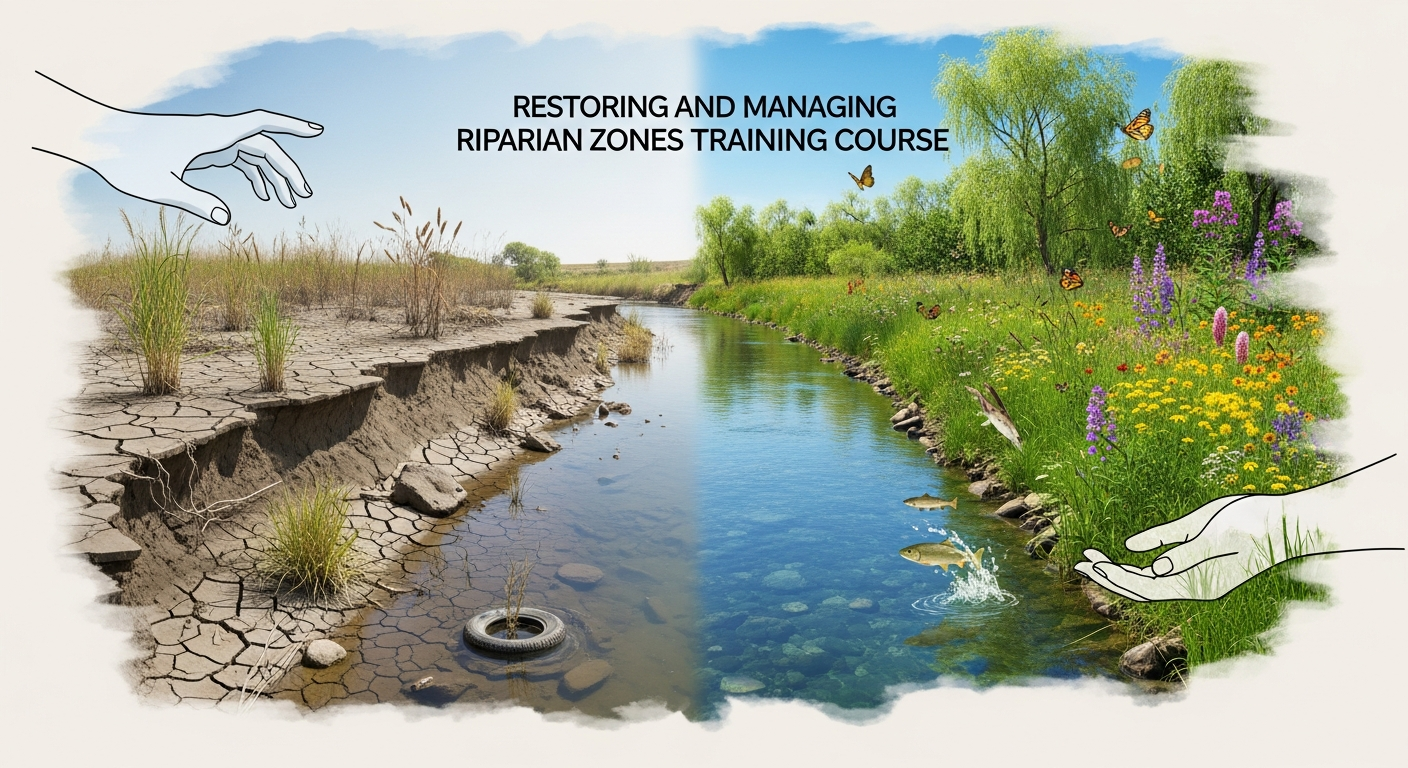
Course Title: Restoring and Managing Riparian Zones Training Course
Executive Summary
This intensive two-week course equips participants with the knowledge and skills necessary to effectively restore and manage riparian zones. Through a combination of theoretical learning, practical exercises, and case studies, participants will gain a comprehensive understanding of riparian ecosystems, their importance, and the various techniques for their restoration and sustainable management. The course covers topics ranging from ecological principles and hydrological processes to policy frameworks and community engagement strategies. Participants will learn how to assess riparian areas, develop restoration plans, implement best management practices, and monitor the effectiveness of restoration efforts. The course emphasizes a holistic approach, integrating ecological, social, and economic considerations to ensure long-term success.
Introduction
Riparian zones, the interface between terrestrial and aquatic ecosystems, play a crucial role in maintaining water quality, providing habitat for diverse species, and regulating streamflow. However, these valuable areas are often degraded due to human activities such as agriculture, urbanization, and deforestation. Effective restoration and management of riparian zones are essential for protecting water resources, enhancing biodiversity, and ensuring the long-term sustainability of watersheds. This course is designed to provide participants with the knowledge and skills necessary to address these challenges. It covers the ecological principles underlying riparian ecosystems, the impacts of various disturbances, and the techniques for restoring and managing these areas. Participants will learn how to assess riparian zones, develop restoration plans, implement best management practices, and monitor the effectiveness of restoration efforts. The course emphasizes a holistic approach, integrating ecological, social, and economic considerations to ensure long-term success.
Course Outcomes
- Understand the ecological functions and importance of riparian zones.
- Assess the condition of riparian areas and identify restoration needs.
- Develop and implement riparian restoration plans.
- Apply best management practices for sustainable riparian zone management.
- Monitor the effectiveness of restoration efforts and adapt management strategies.
- Engage stakeholders and build community support for riparian zone conservation.
- Understand relevant policies and regulations related to riparian zone management.
Training Methodologies
- Interactive lectures and presentations.
- Field visits and hands-on exercises.
- Case study analysis and group discussions.
- GIS and remote sensing applications.
- Riparian assessment techniques.
- Restoration planning workshops.
- Guest lectures from experts in the field.
Benefits to Participants
- Enhanced knowledge of riparian ecology and management.
- Improved skills in riparian assessment and restoration planning.
- Increased confidence in implementing best management practices.
- Networking opportunities with other professionals in the field.
- Access to resources and tools for riparian zone management.
- Professional development and career advancement.
- Contribution to the conservation of valuable riparian ecosystems.
Benefits to Sending Organization
- Improved capacity for riparian zone management.
- Enhanced ability to meet regulatory requirements.
- Strengthened community relations and public image.
- Increased access to funding opportunities for riparian restoration projects.
- Improved water quality and ecosystem health.
- Reduced risk of erosion and flooding.
- Sustainable management of natural resources.
Target Participants
- Natural resource managers.
- Environmental consultants.
- Landowners and farmers.
- Watershed coordinators.
- Engineers and planners.
- Conservation organization staff.
- Government agency personnel.
Week 1: Riparian Ecology and Assessment
Module 1: Introduction to Riparian Zones
- Definition and characteristics of riparian zones.
- Ecological functions and values of riparian areas.
- Importance of riparian zones for water quality.
- Role of riparian zones in habitat provision.
- Impacts of human activities on riparian ecosystems.
- Overview of riparian zone management strategies.
- Introduction to relevant policies and regulations.
Module 2: Riparian Hydrology
- Hydrologic processes in riparian zones.
- Surface water and groundwater interactions.
- Influence of vegetation on streamflow.
- Role of riparian zones in flood control.
- Impacts of channelization and dams.
- Hydrologic assessment techniques.
- Water quality monitoring.
Module 3: Riparian Vegetation
- Plant communities in riparian zones.
- Adaptations of riparian plants.
- Role of vegetation in streambank stabilization.
- Influence of vegetation on water temperature.
- Invasive plant species in riparian areas.
- Vegetation survey techniques.
- Plant identification.
Module 4: Riparian Soils
- Soil formation in riparian zones.
- Soil properties and their influence on vegetation.
- Role of soils in nutrient cycling.
- Impacts of erosion and sedimentation.
- Soil sampling and analysis techniques.
- Soil conservation practices.
- Soil stabilization methods.
Module 5: Riparian Fauna
- Animal communities in riparian zones.
- Habitat requirements of riparian fauna.
- Role of riparian zones in wildlife corridors.
- Impacts of habitat loss and fragmentation.
- Wildlife survey techniques.
- Management of wildlife in riparian areas.
- Protection of endangered species.
Week 2: Riparian Restoration and Management
Module 6: Riparian Assessment and Planning
- Methods for assessing riparian condition.
- Identifying restoration needs and priorities.
- Developing restoration goals and objectives.
- Selecting appropriate restoration techniques.
- Developing a riparian restoration plan.
- Stakeholder involvement in planning.
- Permitting and regulatory requirements.
Module 7: Riparian Restoration Techniques
- Streambank stabilization methods.
- Vegetation planting and seeding.
- Bioengineering techniques.
- Large woody debris placement.
- Sediment control measures.
- Invasive species control.
- Erosion control strategies.
Module 8: Riparian Management Practices
- Grazing management in riparian areas.
- Forest management in riparian areas.
- Agricultural practices in riparian areas.
- Urban development in riparian areas.
- Recreational use of riparian areas.
- Water management in riparian areas.
- Fire management in riparian areas.
Module 9: Monitoring and Evaluation
- Establishing monitoring protocols.
- Measuring restoration success.
- Adaptive management strategies.
- Data analysis and interpretation.
- Reporting and communication of results.
- Long-term monitoring and maintenance.
- Use of remote sensing for monitoring.
Module 10: Community Engagement and Policy
- Building community support for riparian restoration.
- Working with landowners and stakeholders.
- Educational outreach programs.
- Volunteer monitoring programs.
- Funding opportunities for riparian restoration.
- Relevant policies and regulations.
- Case studies of successful riparian restoration projects.
Action Plan for Implementation
- Conduct a riparian assessment on a selected site.
- Develop a riparian restoration plan for the site.
- Identify funding opportunities for the restoration project.
- Engage stakeholders and build community support.
- Implement the restoration plan.
- Monitor the effectiveness of the restoration efforts.
- Share the results with the community and other stakeholders.
Course Features
- Lecture 0
- Quiz 0
- Skill level All levels
- Students 0
- Certificate No
- Assessments Self

You May Like

Advanced Population Ecology and Demographics
Course Title: Advanced Population Ecology and Demographics Executive Summary This intensive two-week course on Advanced Population Ecology and Demographics equips participants with advanced quantitative and...

Applied Conservation Genetics for Species Management
Course Title: Applied Conservation Genetics for Species Management Executive Summary This two-week intensive course on Applied Conservation Genetics for Species Management bridges the gap between...

Threatened Species Recovery and Reintroduction Programs
Course Title: Threatened Species Recovery and Reintroduction Programs Executive Summary This intensive two-week course provides a comprehensive framework for designing, implementing, and managing recovery plans...

Landscape Ecology and Connectivity Science Training Course
Course Title: Landscape Ecology and Connectivity Science Training Course Executive Summary This intensive two-week executive course on Landscape Ecology and Connectivity Science is designed to...

Biodiversity Hotspot Conservation and Management
Course Title: Biodiversity Hotspot Conservation and Management Executive Summary This intensive two-week course on Biodiversity Hotspot Conservation and Management equips participants with the knowledge and...




