
GIS for Protected Area Planning and Management
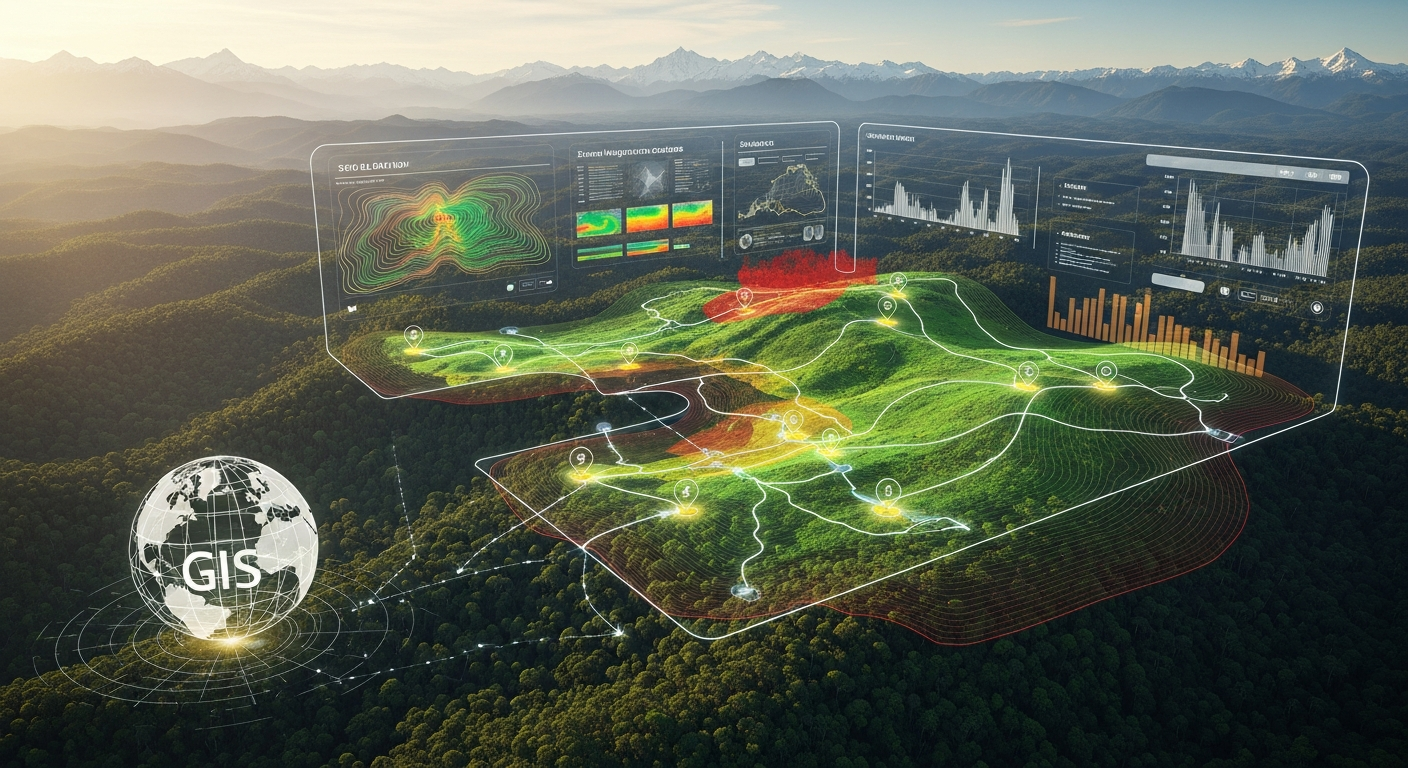
Course Title: GIS for Protected Area Planning and Management
Executive Summary
This intensive two-week training course on GIS for Protected Area Planning equips conservation professionals with essential geospatial skills to manage, monitor, and protect natural resources effectively. Integrating theoretical ecological frameworks with rigorous practical application, the program covers data acquisition, spatial analysis, habitat modeling, and participatory mapping specifically tailored for Protected Areas (PAs). Participants will learn to utilize Geographic Information Systems (GIS) to solve complex zoning challenges, track biodiversity trends, and plan infrastructure while minimizing environmental impact. The curriculum bridges the gap between technical GIS operations and strategic management decisions, ensuring that spatial data effectively informs policy and conservation strategies. By mastering tools like QGIS/ArcGIS and remote sensing technologies, attendees will gain the capacity to visualize threats, optimize resource allocation, and ensure sustainable land-use planning. This course is essential for modernizing PA management systems and achieving international conservation targets through evidence-based spatial planning.
Introduction
Protected Areas (PAs) are the cornerstones of global biodiversity conservation strategies. However, effective management requires more than just legal boundaries; it demands rigorous monitoring, strategic zoning, and the ability to visualize complex ecological and anthropogenic interactions. In an era of climate change and habitat fragmentation, Geographic Information Systems (GIS) have transitioned from optional tools to absolute necessities for PA managers and planners. This course, GIS for Protected Area Planning, is designed to demystify geospatial technologies for conservation professionals, transforming raw data into actionable intelligence.The curriculum begins by establishing a strong foundation in spatial concepts relevant to ecology, progressing rapidly to advanced analytical techniques used in real-world conservation scenarios. Participants will explore how to map habitats, track wildlife corridors, analyze land-cover changes using satellite imagery, and model future scenarios to mitigate threats such as poaching or encroachment. Unlike generic GIS courses, every module is contextualized within the unique challenges of PA management, such as balancing tourism pressure with ecological sensitivity.We emphasize a practical, hands-on approach. Through daily labs, participants will work with real datasets—ranging from satellite telemetry to community-sourced patrol data. The course also addresses the integration of GIS into broader management plans, ensuring that maps and spatial analyses serve as compelling tools for stakeholder communication, funding proposals, and policy advocacy. By the end of these two weeks, participants will not just be GIS users; they will be spatial thinkers capable of leveraging technology to secure the future of protected landscapes.
Course Outcomes
- Proficiency in collecting and managing spatial data for conservation purposes.
- Ability to perform spatial analysis for habitat suitability and zoning.
- Competence in using remote sensing to monitor land-use changes.
- Skills to design ecological corridors and landscape connectivity maps.
- Capacity to integrate community data into participatory GIS frameworks.
- Mastery of cartographic design for effective stakeholder reporting.
- Ability to develop data-driven management plans for protected areas.
Training Methodologies
- Hands-on software tutorials (QGIS/ArcGIS) and lab exercises.
- Field data collection simulations using GPS and mobile devices.
- Case study analysis of successful PA spatial planning.
- Interactive group projects solving zoning conflicts.
- Remote sensing interpretation workshops.
- Peer-to-peer review of cartographic outputs.
- Capstone project developing a spatial management plan.
Benefits to Participants
- Acquisition of highly marketable technical skills in GIS.
- Enhanced ability to visualize and solve complex ecological problems.
- Improved efficiency in reporting and monitoring tasks.
- Confidence in using evidence-based data for decision-making.
- Access to a library of open-source conservation data resources.
- Networking with peers facing similar conservation challenges.
- Professional certification in applied geospatial technology.
Benefits to Sending Organization
- Modernized data management systems and institutional memory.
- More accurate and compelling reporting to donors and government.
- Improved resource allocation based on spatial evidence.
- Enhanced capacity for in-house monitoring and evaluation.
- Reduced reliance on external consultants for mapping tasks.
- Better conflict resolution through visualized zoning plans.
- Alignment with international standards for PA monitoring.
Target Participants
- Protected Area Managers and Park Wardens.
- Conservation Biologists and Ecologists.
- Land Use Planners and Zoning Officers.
- Environmental Impact Assessment Specialists.
- Monitoring and Evaluation (M&E) Officers.
- Wildlife Research Officers.
- NGO Program Coordinators involved in landscape conservation.
WEEK 1: Foundations of GIS and Data Acquisition
Module 1: Introduction to GIS in Conservation
- Principles of GIS and its role in PA management.
- Coordinate systems and projections suitable for local regions.
- Vector vs. Raster data models in ecology.
- Overview of software interface and navigation.
- Legal and ethical considerations of spatial data.
- Review of global conservation datasets (IUCN, WDPA).
- Lab: Creating a basic base map of a Protected Area.
Module 2: Spatial Data Collection and Management
- Using GPS units for field boundary delineation.
- Mobile data collection tools (SMART, CyberTracker).
- Georeferencing scanned paper maps and historical charts.
- Database design: Attribute tables and metadata standards.
- Integrating drone imagery into GIS workflows.
- Data quality control and topology rules.
- Field Simulation: Collecting waypoint data for infrastructure.
Module 3: Remote Sensing and Land Cover Mapping
- Introduction to satellite imagery (Landsat, Sentinel).
- Understanding spectral bands and vegetation indices (NDVI).
- Image classification techniques (Supervised vs. Unsupervised).
- Detecting deforestation and habitat encroachment.
- Temporal analysis: Comparing past and present landscapes.
- Accessing free satellite data repositories.
- Lab: Creating a Land Use/Land Cover (LULC) map.
Module 4: Spatial Analysis for Habitat Management
- Geoprocessing tools: Buffer, Clip, Intersect, Union.
- Proximity analysis for threat assessment.
- Habitat Suitability Modeling (HSM) basics.
- Identifying core habitats vs. buffer zones.
- Hotspot analysis for poaching or invasive species.
- Calculating area statistics for official reporting.
- Exercise: Mapping suitable habitats for a flagship species.
Module 5: Cartography and Visualization
- Principles of effective map design and symbology.
- Labeling, scale bars, legends, and north arrows.
- Visualizing 3D terrain using Digital Elevation Models.
- Creating thematic maps for management reports.
- Exporting maps for web and print formats.
- Using StoryMaps as a communication tool.
- Presentation: Reviewing participant map outputs.
WEEK 2: Advanced Applications and Strategic Planning
Module 6: Zoning and Land Use Planning
- Multi-Criteria Decision Analysis (MCDA) for zoning.
- Balancing conservation, tourism, and community needs.
- Weighted overlay analysis techniques.
- Defining strict protection vs. sustainable use zones.
- Conflict mapping: Overlapping resource claims.
- Infrastructure planning for roads and ranger stations.
- Workshop: Designing a draft zoning plan for a PA.
Module 7: Connectivity and Corridor Design
- Theory of island biogeography and landscape connectivity.
- Least-Cost Path analysis for wildlife movement.
- Circuitscape concepts for corridor identification.
- Fragmented landscape analysis and patch metrics.
- Identifying bottlenecks and barriers to migration.
- Transboundary conservation mapping challenges.
- Lab: Proposing a wildlife corridor between two PAs.
Module 8: Participatory GIS (PGIS) and Community Engagement
- Incorporating indigenous knowledge into spatial databases.
- Community mapping methodologies and ethics.
- Mapping ecosystem services and resource usage.
- Conflict resolution using PGIS visualizations.
- Public participation in boundary demarcation.
- Data sovereignty and privacy issues in mapping.
- Case Study: Successful PGIS projects in PAs.
Module 9: Monitoring, Surveillance, and Response
- Integrating Ranger Patrol Data (SMART).
- Real-time fire monitoring systems (FIRMS).
- Predictive modeling for illegal activities.
- Automating workflows for weekly reporting.
- Dashboard creation for decision-makers.
- Planning patrol routes based on spatial risk.
- Simulation: Rapid response planning using GIS.
Module 10: Strategic Implementation and Wrap-up
- Developing an institutional GIS strategy.
- Budgeting for hardware, software, and training.
- Data maintenance, archiving, and backup protocols.
- Integrating GIS into official Management Plans.
- Presenting spatial evidence to policymakers.
- Final Capstone Project Presentations.
- Course evaluation and certification.
Action Plan for Implementation
- Conduct a GIS needs assessment within the sending organization.
- Install and configure necessary GIS software (QGIS/ArcGIS).
- Consolidate existing spatial data into a central geodatabase.
- Initiate a pilot mapping project for a specific management issue.
- Train two junior staff members on basic GPS data collection.
- Produce updated base maps for the Protected Area within 3 months.
- Submit a quarterly spatial report to management highlighting changes.
Course Features
- Lecture 0
- Quiz 0
- Skill level All levels
- Students 0
- Certificate No
- Assessments Self

You May Like

Advanced Population Ecology and Demographics
Course Title: Advanced Population Ecology and Demographics Executive Summary This intensive two-week course on Advanced Population Ecology and Demographics equips participants with advanced quantitative and...

Applied Conservation Genetics for Species Management
Course Title: Applied Conservation Genetics for Species Management Executive Summary This two-week intensive course on Applied Conservation Genetics for Species Management bridges the gap between...

Threatened Species Recovery and Reintroduction Programs
Course Title: Threatened Species Recovery and Reintroduction Programs Executive Summary This intensive two-week course provides a comprehensive framework for designing, implementing, and managing recovery plans...

Landscape Ecology and Connectivity Science Training Course
Course Title: Landscape Ecology and Connectivity Science Training Course Executive Summary This intensive two-week executive course on Landscape Ecology and Connectivity Science is designed to...

Biodiversity Hotspot Conservation and Management
Course Title: Biodiversity Hotspot Conservation and Management Executive Summary This intensive two-week course on Biodiversity Hotspot Conservation and Management equips participants with the knowledge and...




