
Advanced Fire Ecology and Prescribed Burning Strategies
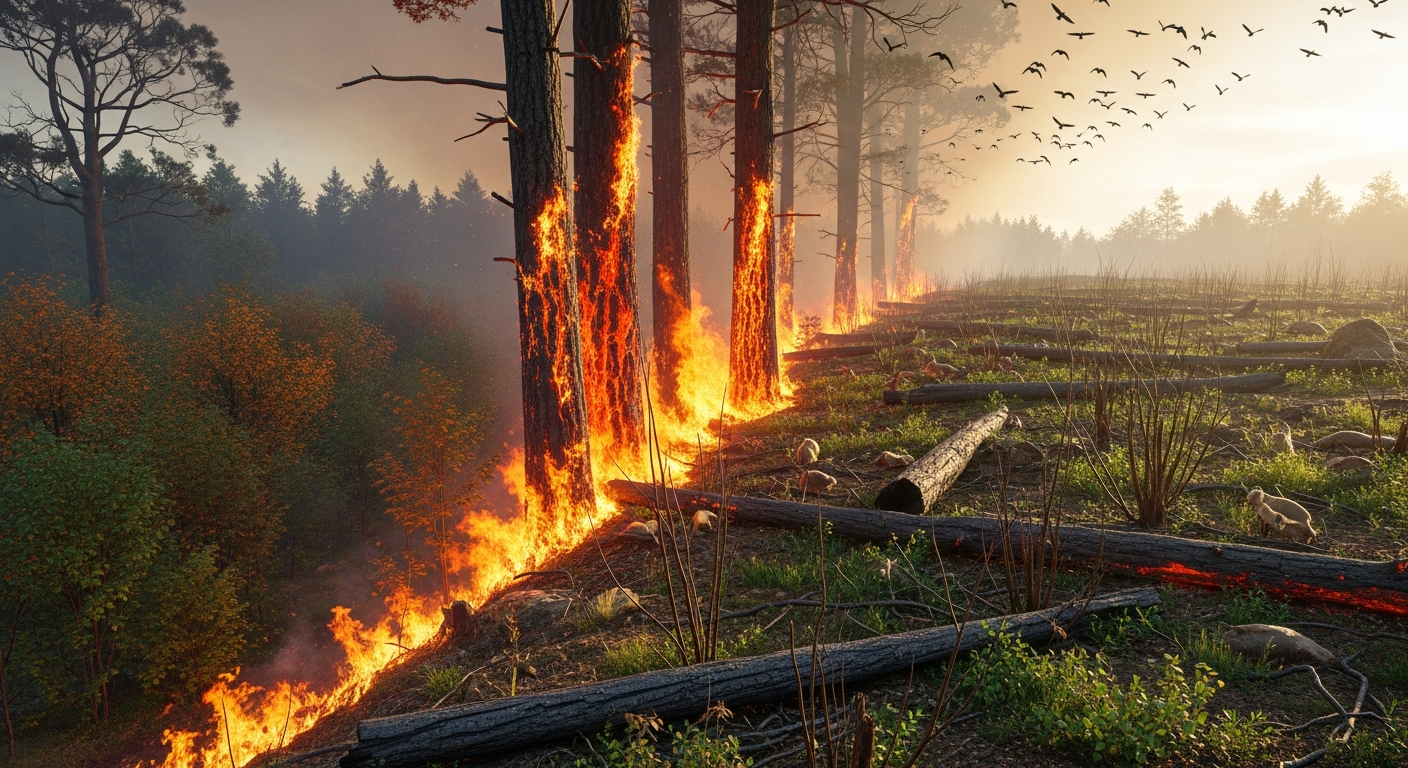
Course Title: Advanced Fire Ecology and Prescribed Burning Strategies
Executive Summary
This two-week intensive course on Fire Ecology and Prescribed Burning equips land managers and environmental safety professionals with a comprehensive framework for understanding fire as both an ecological process and a strategic management tool. Participants will explore the complex dynamics of fire behavior, ecosystem responses, and the detailed planning required for safe prescribed burns. The curriculum balances theoretical knowledge of fire regimes and biodiversity with practical skills in operational planning, risk mitigation, and smoke management. By integrating meteorology, fuel assessment, and legal compliance, the program ensures a holistic approach to land stewardship. Attendees will engage in simulation exercises and ignition technique workshops to master the operational art of controlled burning. The course empowers professionals to restore ecosystem health, reduce wildfire hazards, and navigate the regulatory landscape of fire management, ultimately fostering resilient landscapes and safer communities through science-based fire application.
Introduction
In an era of changing climates and increasing wildfire intensity, the role of fire in land management has shifted from simple suppression to strategic ecological application. Fire is a natural and vital evolutionary force in many ecosystems, yet its mismanagement or absence can lead to catastrophic fuel loads and biodiversity loss. Consequently, land managers, conservationists, and public safety officials face the dual challenge of mitigating uncontrolled wildfire risks while harnessing fire’s regenerative power through prescribed burning. The Advanced Fire Ecology and Prescribed Burning Strategies course offers a rigorous deep dive into the science and practice of controlled fire, designed to bridge the gap between ecological theory and operational reality. Participants will examine how different fire regimes influence vegetation succession, soil chemistry, and wildlife habitats. Beyond the biology, the course emphasizes the technical and administrative complexities of burning, including ignition patterns, fire weather analysis, and smoke dispersal modeling. Drawing from global standards in fire suppression and forestry management, the training utilizes a blend of classroom instruction, field assessments, and tactical planning exercises. It addresses the critical human elements of fire management—community engagement, legal liability, and inter-agency coordination. By the end of this program, participants will possess the confidence and capability to design and execute burns that achieve specific ecological objectives while maintaining the highest safety standards, transforming them into competent practitioners capable of designing resilient landscape strategies.
Course Outcomes
- Analyze fire behavior dynamics relative to fuel, weather, and topography.
- Design comprehensive, legally compliant prescribed burn plans.
- Assess the ecological impacts of fire on specific flora and fauna.
- Apply meteorological data to determine safe burn windows.
- Execute complex ignition and holding strategies safely.
- Manage legal liabilities, smoke impacts, and public relations.
- Conduct post-burn monitoring and ecological rehabilitation.
Training Methodologies
- Expert-led technical lectures on fire science.
- Sand-table exercises and tactical simulations.
- Fuel modeling and calculation workshops.
- Case study analysis of historic burn operations.
- Equipment demonstration and handling labs.
- Meteorological data analysis and forecasting sessions.
- Group drafting of operational burn plans.
Benefits to Participants
- Mastery of fire weather prediction and behavior analysis.
- Enhanced safety leadership skills in high-risk environments.
- Ability to write defensible, professional burn plans.
- Practical knowledge of ignition and suppression tools.
- Deep understanding of legal and liability frameworks.
- Improved skills in communicating fire benefits to the public.
- Certification in prescribed fire management techniques.
Benefits to Sending Organization
- Reduced risk of catastrophic wildfires on managed lands.
- Improved ecological health and biodiversity indices.
- Full compliance with environmental and safety regulations.
- Enhanced inter-agency cooperation and resource sharing.
- Cost-effective fuel load management strategies.
- Increased public trust through safe operation execution.
- Development of a skilled internal fire management team.
Target Participants
- Forest and Land Managers.
- Fire Chiefs and Incident Commanders.
- Conservation Ecologists.
- Environmental Impact Assessors.
- Park Rangers and Wardens.
- Disaster Risk Reduction Officers.
- Agricultural and Forestry Extension Officers.
WEEK 1: Fire Science, Ecology, and Planning Fundamentals
Module 1 – Principles of Fire Behavior
- The Fire Triangle and Fire Behavior Triangle.
- Fuel characteristics: size, arrangement, and continuity.
- Influence of topography on fire spread.
- Heat transfer mechanisms in wildland fire.
- Extreme fire behavior and blow-up conditions.
- Standard fire orders and watch-out situations.
- Introduction to fire physics and chemistry.
Module 2 – Fire Ecology and Ecosystems
- Fire regimes and historical fire intervals.
- Plant adaptations to fire: resisters vs. sprouters.
- Effects of fire on soil chemistry and hydrology.
- Wildlife interaction and habitat modification.
- Fire and invasive species management.
- Ecological succession post-disturbance.
- Restoring degraded landscapes using fire.
Module 3 – Fuels Management and Assessment
- Classification of fuel models and types.
- Techniques for sampling fuel loading.
- Live vs. dead fuel moisture content analysis.
- Mechanical and chemical fuel modification.
- Constructing fuel breaks and defensible space.
- Using software for fuel modeling.
- Field exercise: Fuel inventory assessment.
Module 4 – Fire Weather and Climatology
- Atmospheric stability and inversion layers.
- Wind patterns, fronts, and local wind systems.
- Relative humidity and temperature relationships.
- Reading and interpreting fire weather forecasts.
- On-site weather monitoring instruments.
- Seasonality and burn window determination.
- Impact of climate change on fire seasons.
Module 5 – The Prescribed Burn Plan
- Defining specific and measurable burn objectives.
- Writing the burn prescription parameters.
- Establishing boundaries and contingency lines.
- Burn complexity rating and risk assessment.
- Medical and emergency evacuation planning.
- Pre-burn authorization and notification lists.
- Workshop: Drafting a preliminary burn plan.
WEEK 2: Operational Implementation and Management
Module 6 – Equipment and Ignition Techniques
- Drip torches and ground ignition tools.
- Aerial ignition systems and applications.
- Firing patterns: backing, heading, and flanking fires.
- Point source vs. strip firing techniques.
- Water delivery systems and pumps.
- Personal Protective Equipment (PPE) standards.
- Equipment maintenance and field troubleshooting.
Module 7 – Smoke Management and Air Quality
- Chemistry of combustion and smoke composition.
- Dispersion modeling and ventilation indices.
- Regulatory compliance and air quality standards.
- Identifying sensitive receptors (schools, hospitals).
- Mitigation strategies for smoke impact.
- Public notification and signage protocols.
- Case study: Managing urban-interface smoke.
Module 8 – Risk Management and Safety Protocols
- Pre-burn briefings and chain of command.
- LCES (Lookouts, Communications, Escape Routes, Safety Zones).
- Go/No-Go checklists and decision points.
- Entrapment avoidance and shelter deployment.
- Managing fatigue and heat stress.
- Incident Command System (ICS) integration.
- Simulation: Emergency response during a burn.
Module 9 – Legal, Social, and Policy Frameworks
- Understanding liability and negligence laws.
- Permitting processes and legal documentation.
- Public perception and social license to burn.
- Media relations and crisis communication.
- Inter-agency agreements and MOUs.
- Ethics in land management and fire use.
- Role play: Stakeholder town hall meeting.
Module 10 – Post-Burn Evaluation and Monitoring
- Mop-up standards and patrol requirements.
- Burn severity assessment and mapping.
- Monitoring vegetation regeneration and mortality.
- Reporting requirements and documentation.
- Conducting After Action Reviews (AAR).
- Adaptive management: Learning from results.
- Capstone presentation: Final Burn Plan defense.
Action Plan for Implementation
- Identify a specific land unit requiring fire treatment within the organization.
- Conduct baseline fuel and weather data collection for the site.
- Draft a comprehensive, compliant prescribed burn plan.
- Secure necessary permits and internal stakeholder approvals.
- Acquire necessary resources and train the burn crew.
- Execute the burn within the identified prescription window.
- Monitor site recovery and document ecological outcomes for future planning.
Course Features
- Lecture 0
- Quiz 0
- Skill level All levels
- Students 0
- Certificate No
- Assessments Self

You May Like

Advanced Population Ecology and Demographics
Course Title: Advanced Population Ecology and Demographics Executive Summary This intensive two-week course on Advanced Population Ecology and Demographics equips participants with advanced quantitative and...

Applied Conservation Genetics for Species Management
Course Title: Applied Conservation Genetics for Species Management Executive Summary This two-week intensive course on Applied Conservation Genetics for Species Management bridges the gap between...

Threatened Species Recovery and Reintroduction Programs
Course Title: Threatened Species Recovery and Reintroduction Programs Executive Summary This intensive two-week course provides a comprehensive framework for designing, implementing, and managing recovery plans...

Landscape Ecology and Connectivity Science Training Course
Course Title: Landscape Ecology and Connectivity Science Training Course Executive Summary This intensive two-week executive course on Landscape Ecology and Connectivity Science is designed to...

Biodiversity Hotspot Conservation and Management
Course Title: Biodiversity Hotspot Conservation and Management Executive Summary This intensive two-week course on Biodiversity Hotspot Conservation and Management equips participants with the knowledge and...




