
Field Methods in Wildlife Biology Training Course
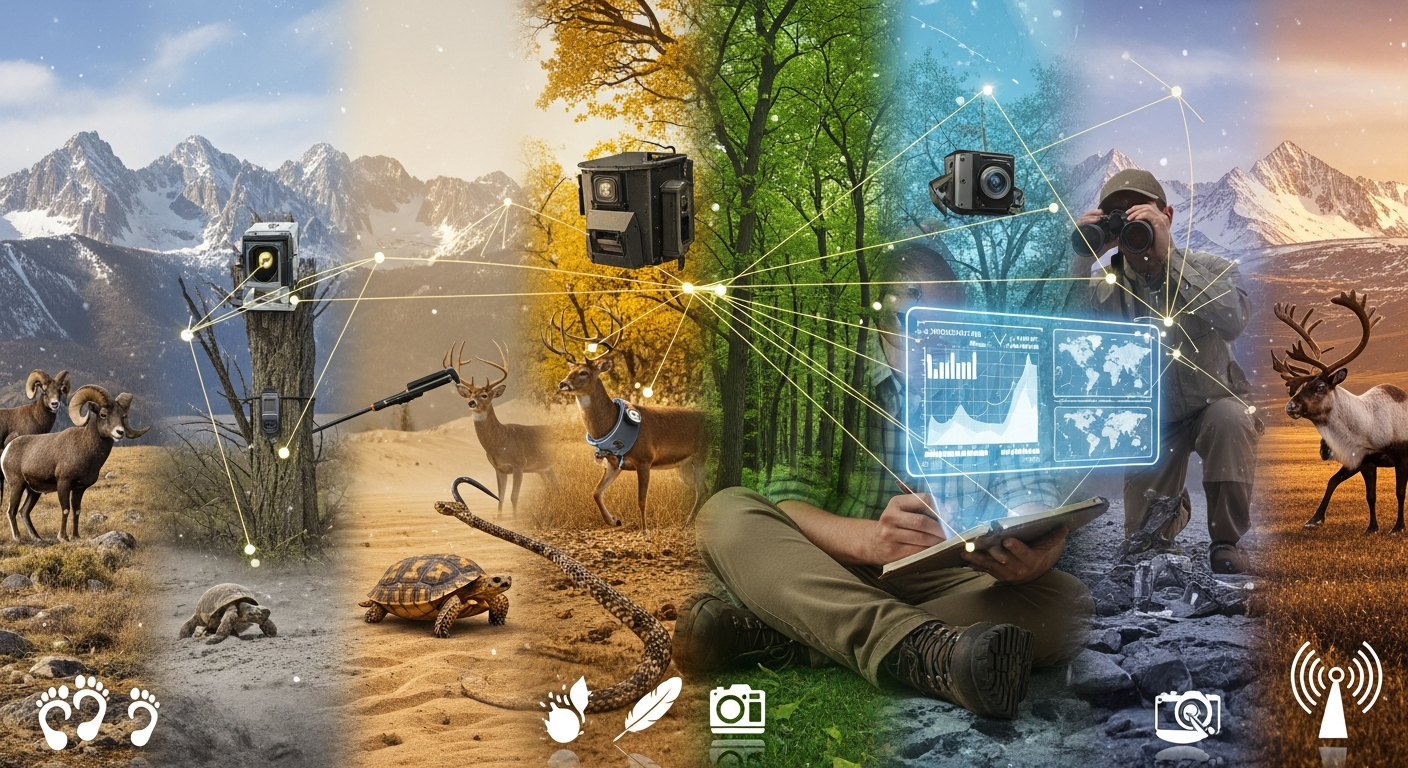
Course Title: Field Methods in Wildlife Biology Training Course
Executive Summary
This two-week intensive training course on Field Methods in Wildlife Biology provides field practitioners, researchers, and conservationists with the essential technical skills required for rigorous biodiversity monitoring and wildlife management. Participants will gain hands-on experience in study design, population surveying, animal handling, and tracking technologies across various taxa. The curriculum bridges the gap between theoretical ecology and practical application, emphasizing standardized protocols to ensure data accuracy and reliability. By integrating traditional observation methods with modern technologies like GIS, camera trapping, and bioacoustics, the course ensures trainees are equipped to tackle contemporary conservation challenges. Designed for professionals working in diverse habitats, the program facilitates the collection of high-quality biological data necessary for evidence-based decision-making. Graduates leave with the competence to lead field expeditions, manage datasets, and implement effective wildlife monitoring programs that support institutional mandates and national conservation strategies.
Introduction
Effective wildlife management and conservation rely heavily on the availability of accurate, reliable, and timely data. In the face of accelerating biodiversity loss and habitat fragmentation, the role of field biologists has never been more critical. However, the quality of conservation decisions is only as good as the data upon which they are based. Consequently, mastering rigorous field methods is fundamental for professionals tasked with monitoring populations, assessing habitat health, and implementing recovery plans. The Field Methods in Wildlife Biology course is a comprehensive capacity-building program designed to standardize field techniques and enhance the technical proficiency of wildlife professionals. It moves beyond basic identification to cover complex survey designs, non-invasive monitoring, and ethical handling procedures. The curriculum is structured to address the logistical and scientific challenges faced in the field, ranging from equipment maintenance to statistical power analysis. Utilizing a blend of classroom theory and simulated field scenarios, the course covers a wide spectrum of taxa including mammals, birds, herpetofauna, and vegetation analysis. It specifically addresses the integration of emerging technologies, such as drone surveillance and acoustic monitoring, alongside traditional transect and plot methods. Furthermore, the course emphasizes the ‘data lifecycle’—from rigorous collection and digital entry to analysis and reporting. Participants will learn how to minimize bias and observer error, ensuring that their fieldwork yields scientifically robust results. By the end of this training, participants will possess not only the practical skills to execute field studies but also the analytical mindset to interpret findings and contribute meaningfully to conservation policy and management actions.
Course Outcomes
- Design statistically robust field surveys for diverse wildlife taxa.
- Apply standardized census and sampling techniques (transects, point counts).
- Operate modern field equipment including GPS, camera traps, and telemetry.
- Demonstrate ethical animal handling and safety protocols.
- Conduct habitat assessments and vegetation analysis.
- Manage, analyze, and interpret biological data using relevant software.
- Produce professional field reports to support management decisions.
Training Methodologies
- Hands-on field demonstrations and practical exercises.
- Interactive lectures on study design and statistics.
- Simulation of capture-mark-recapture scenarios.
- Workshops on data entry and software (R/GIS).
- Group projects designing hypothetical monitoring programs.
- Case studies of successful wildlife monitoring projects.
- Peer review of field logs and technical reports.
Benefits to Participants
- Mastery of standardized field protocols and techniques.
- Increased confidence in using technical field equipment.
- Enhanced data analysis and report writing skills.
- Ability to lead and supervise field teams effectively.
- Improved understanding of safety and ethics in fieldwork.
- Networking opportunities with conservation professionals.
- Certification of technical competence in wildlife biology.
Benefits to Sending Organization
- Acquisition of high-quality, reliable biological data.
- Standardization of monitoring protocols across projects.
- Improved efficiency and safety in field operations.
- Enhanced capacity for in-house data analysis and reporting.
- Stronger evidence base for management and policy decisions.
- Reduced reliance on external consultants for surveys.
- Increased institutional credibility in conservation science.
Target Participants
- Wildlife Officers and Park Rangers.
- Conservation Biologists and Ecologists.
- Environmental Impact Assessment Consultants.
- NGO Field Project Coordinators.
- Research Assistants and Graduate Students.
- Natural Resource Managers.
- Forestry and Protected Area Wardens.
WEEK 1: Fundamentals of Survey Design and Sampling Techniques
Module 1 – Principles of Study Design & Safety
- Hypothesis testing vs. monitoring objectives.
- Random, systematic, and stratified sampling designs.
- Understanding bias, precision, and accuracy in data.
- Field safety protocols and risk assessment.
- Research ethics and permitting requirements.
- Navigation, map reading, and GPS usage.
- Best practices for field notebooks and data sheets.
Module 2 – Vegetation and Habitat Assessment
- Quadrat and plot sampling methods.
- Point-center quarter method for forestry.
- Measuring canopy cover, density, and biomass.
- Habitat typing and ecological classification.
- Plant identification basics and voucher collection.
- Assessing habitat disturbance and fragmentation.
- Practical exercise: Creating a habitat map.
Module 3 – Mammal Survey Techniques
- Line transects and distance sampling theory.
- Spoor tracking and sign surveys (dung/nests).
- Camera trapping protocols and grid design.
- Small mammal trapping (Sherman/Pitfall traps).
- Large mammal aerial and road strip counts.
- Dung count methods for biomass estimation.
- Practical exercise: Setting up a camera trap grid.
Module 4 – Avian Survey Methods
- Point counts vs. line transects for birds.
- Mist netting and bird ringing fundamentals.
- Bioacoustics and call playback techniques.
- Wetland bird counts and waterfowl monitoring.
- Raptor surveys and nest monitoring.
- Time-species counts (Mackinnon lists).
- Equipment usage: Binoculars and spotting scopes.
Module 5 – Herpetofauna and Invertebrate Surveys
- Visual encounter surveys (VES).
- Pitfall trapping with drift fences.
- Acoustic monitoring for amphibians.
- Transect walks for butterflies and dragonflies.
- Sweep netting and beating techniques.
- Night surveys and spotlighting protocols.
- Safety procedures for venomous species.
WEEK 2: Advanced Techniques, Technology, and Data Management
Module 6 – Wildlife Telemetry and Tracking
- Principles of VHF and GPS telemetry.
- Animal collaring and tagging techniques.
- Triangulation and homing procedures.
- Analyzing movement data and home ranges.
- Integrating telemetry with satellite remote sensing.
- Ethical considerations in animal capture.
- Simulation: Radio telemetry tracking exercise.
Module 7 – Human-Wildlife Conflict & Social Surveys
- Interview techniques and questionnaire design.
- Assessing crop damage and livestock predation.
- Participatory Rural Appraisal (PRA) tools.
- Mapping conflict hotspots using GIS.
- Community-based wildlife monitoring systems.
- Engaging stakeholders in field research.
- Case study: Monitoring conflict mitigation measures.
Module 8 – Data Management and Analysis
- Data entry best practices and digitization.
- Database management (Excel/Access basics).
- Introduction to Distance software for density.
- Calculating biodiversity indices (Shannon/Simpson).
- Basics of occupancy modeling.
- Data cleaning and quality control procedures.
- Computer Lab: Analyzing data collected in Week 1.
Module 9 – Field Technology and Innovation
- Drone (UAV) applications in wildlife surveys.
- Environmental DNA (eDNA) sampling protocols.
- Mobile data collection apps (CyberTracker/SMART).
- Thermal imaging applications for night surveys.
- Automated image recognition software.
- GIS integration for field mapping.
- Solar power and remote equipment maintenance.
Module 10 – Reporting and Action Planning
- Structure of a technical field report.
- Data visualization (graphs, maps, tables).
- Communicating statistical uncertainty.
- Translating data into management recommendations.
- Peer review of draft monitoring reports.
- Developing a Standard Operating Procedure (SOP).
- Capstone presentation: Integrated survey plan.
Action Plan for Implementation
- Select a priority site or species for immediate monitoring.
- Develop a specific study design and sampling protocol.
- Procure or maintain necessary field equipment.
- Conduct a pilot survey to test methods and logistics.
- Establish a digital database for long-term data storage.
- Train junior staff on the new standardized protocols.
- Produce an initial baseline report within 3 months.
Course Features
- Lecture 0
- Quiz 0
- Skill level All levels
- Students 0
- Certificate No
- Assessments Self

You May Like

Advanced Population Ecology and Demographics
Course Title: Advanced Population Ecology and Demographics Executive Summary This intensive two-week course on Advanced Population Ecology and Demographics equips participants with advanced quantitative and...

Applied Conservation Genetics for Species Management
Course Title: Applied Conservation Genetics for Species Management Executive Summary This two-week intensive course on Applied Conservation Genetics for Species Management bridges the gap between...

Threatened Species Recovery and Reintroduction Programs
Course Title: Threatened Species Recovery and Reintroduction Programs Executive Summary This intensive two-week course provides a comprehensive framework for designing, implementing, and managing recovery plans...

Landscape Ecology and Connectivity Science Training Course
Course Title: Landscape Ecology and Connectivity Science Training Course Executive Summary This intensive two-week executive course on Landscape Ecology and Connectivity Science is designed to...

Biodiversity Hotspot Conservation and Management
Course Title: Biodiversity Hotspot Conservation and Management Executive Summary This intensive two-week course on Biodiversity Hotspot Conservation and Management equips participants with the knowledge and...




