
Endangered Species Management and Conservation Strategy
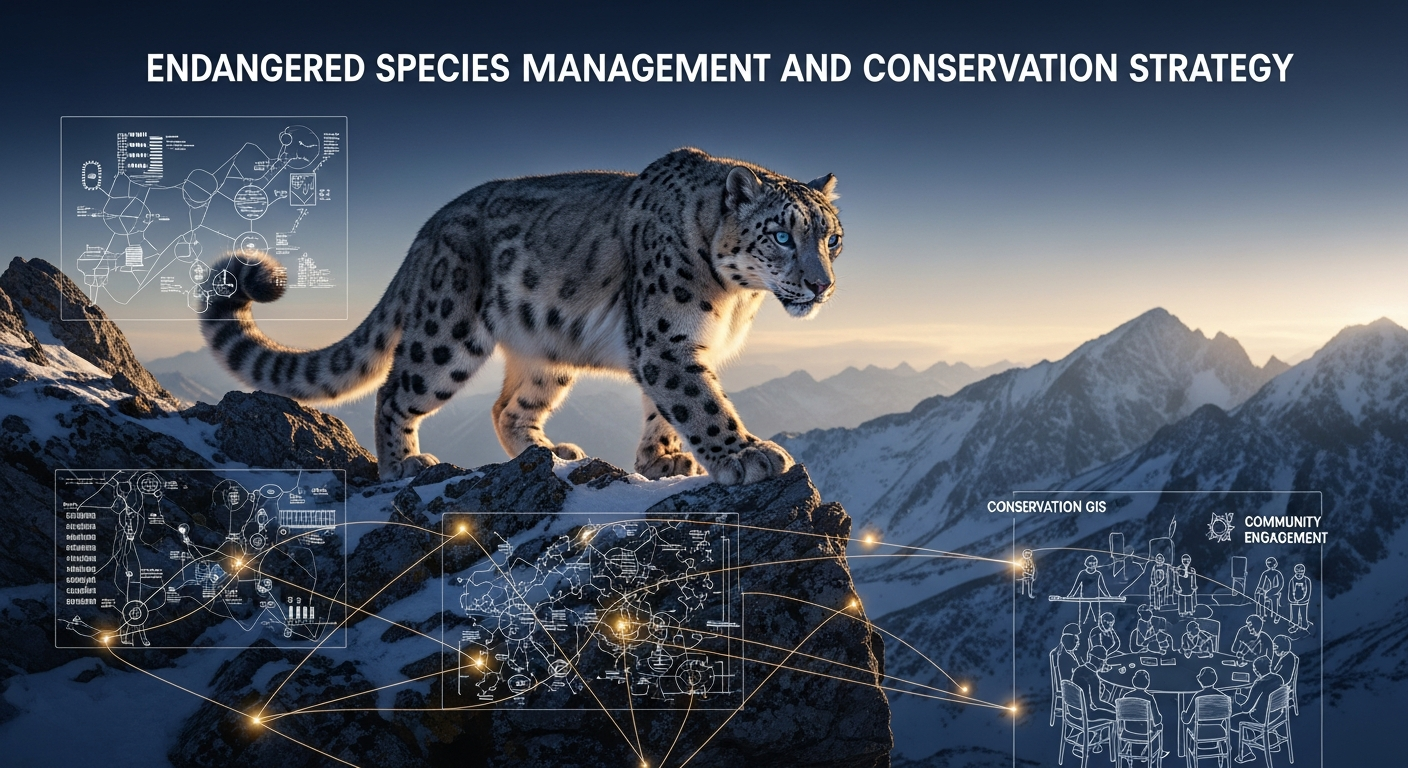
Course Title: Endangered Species Management and Conservation Strategy
Executive Summary
This comprehensive two-week executive course on Endangered Species Management equips conservation professionals and environmental leaders with advanced frameworks to design, implement, and monitor species recovery strategies. Amidst accelerating biodiversity loss, this program provides a rigorous blend of conservation biology, legal compliance, and strategic planning tools. Participants will master the lifecycle of species management—from population assessment and habitat restoration to conflict mitigation and community engagement. The curriculum emphasizes evidence-based decision-making, utilizing modern technologies such as GIS tracking and genetic management alongside traditional ecological knowledge. By analyzing global best practices and complex case studies, attendees gain the foresight to navigate political and economic challenges in conservation. The course fosters adaptive management capabilities, ensuring that graduates can lead sustainable interventions that protect vulnerable populations while addressing human development needs. Ultimately, this training builds the institutional capacity required to reverse extinction trends and maintain ecosystem integrity.
Introduction
The global biodiversity crisis faces a critical turning point, with extinction rates estimated to be 1,000 times higher than natural background rates. For conservation agencies, NGOs, and governments, the challenge is no longer just about protecting nature in isolation but managing endangered species within complex, human-dominated landscapes. Effective management requires a paradigm shift from reactive protection to proactive, strategic recovery planning that integrates science, policy, and socio-economic factors.The Endangered Species Management and Conservation Strategy course is designed to empower participants with the multi-disciplinary skills necessary to prevent species extinction and restore ecological balance. Over two weeks, the program bridges the gap between scientific theory and practical application. Participants will delve into the technical aspects of population dynamics, genetic viability, and habitat connectivity, while simultaneously exploring the governance structures required to enforce protection laws like CITES and national biodiversity acts.The training methodology is highly interactive, incorporating real-world simulations, data modeling workshops, and peer-to-peer strategy sessions. It addresses critical contemporary issues such as human-wildlife conflict, the illegal wildlife trade, and the impacts of climate change on vulnerable habitats. By focusing on both in-situ (on-site) and ex-situ (off-site) conservation methods, the course provides a holistic view of recovery options.By the end of this program, professionals will possess a robust toolkit for developing fundable, scalable, and socially inclusive conservation projects. They will emerge as strategic leaders capable of fostering cross-sector collaboration and driving measurable positive impacts for endangered species and the communities that live alongside them.
Course Outcomes
- Design comprehensive Species Recovery Plans (SRPs) rooted in scientific data.
- Implement advanced monitoring techniques including GIS, telemetry, and bio-acoustics.
- Interpret and apply international legal frameworks like CITES and IUCN guidelines.
- Develop effective conflict mitigation strategies for human-wildlife coexistence.
- Apply genetic management principles to sustain viable populations in wild and captive settings.
- Formulate financial sustainability models and grant strategies for long-term conservation.
- Coordinate multi-stakeholder partnerships involving communities, governments, and NGOs.
Training Methodologies
- Expert-led lectures on conservation biology and environmental law.
- Interactive case study analysis of successful species recoveries.
- Practical workshops on GIS data mapping and population modeling.
- Role-playing simulations for stakeholder negotiation and conflict resolution.
- Field-based scenarios for habitat assessment and monitoring.
- Peer review sessions for draft management plans.
- Capstone project presentation focused on strategic implementation.
Benefits to Participants
- Mastery of modern conservation technologies and assessment tools.
- Enhanced leadership capabilities in complex environmental management.
- Ability to draft robust, evidence-based species recovery documents.
- Deepened understanding of genetic and ecological risk factors.
- Improved skills in grant writing and resource mobilization.
- Access to a global network of conservation experts and practitioners.
- Certification of competence in specialized endangered species management.
Benefits to Sending Organization
- Strengthened institutional capacity for biodiversity preservation.
- Alignment of local projects with international conservation standards.
- Improved success rates in species reintroduction and recovery initiatives.
- Enhanced reputation through evidence-based conservation outcomes.
- More efficient allocation of financial and human resources.
- Reduced legal and operational risks through better compliance strategies.
- Development of sustainable community partnerships and public trust.
Target Participants
- Wildlife Park Wardens and Protected Area Managers.
- Senior Conservation Biologists and Ecologists.
- Environmental NGO Program Directors.
- CITES Management and Scientific Authority Officials.
- Zoological Curators and Captive Breeding Specialists.
- Environmental Policy Analysts and Planners.
- Natural Resource Management Officers.
WEEK 1: Foundations of Species Conservation and Assessment
Module 1 – Fundamentals of Conservation Biology
- Principles of population dynamics and extinction drivers.
- Understanding the IUCN Red List categories and criteria.
- Keystone, umbrella, and flagship species concepts.
- Genetic diversity and the risks of inbreeding depression.
- Carrying capacity and minimum viable population analysis.
- Ecosystem services provided by endangered species.
- Case study: Analysis of a critical population collapse.
Module 2 – Legal Frameworks and Compliance
- International conventions: CITES, CBD, and CMS.
- National wildlife protection laws and enforcement challenges.
- Transboundary conservation agreements and protocols.
- Combating illegal wildlife trade and trafficking.
- Ethics in wildlife management and research.
- Forensic science in wildlife law enforcement.
- Workshop: Navigating regulatory hurdles for conservation.
Module 3 – Population Monitoring and Technology
- Survey methods: Transects, point counts, and mark-recapture.
- Utilizing camera traps and remote sensing technology.
- Radio telemetry and satellite tracking applications.
- Drone technology for habitat and species surveillance.
- Bio-acoustics monitoring for elusive species.
- Data management and analysis software (e.g., DISTANCE, R).
- Practical Lab: Designing a monitoring protocol.
Module 4 – Habitat Management and Restoration
- Assessing habitat quality and fragmentation.
- Designing wildlife corridors and connectivity zones.
- Management of invasive species threatening endemics.
- Restoration ecology techniques for degraded landscapes.
- Impact of climate change on habitat suitability.
- Integrated land-use planning and zoning.
- Exercise: Mapping critical habitat requirements.
Module 5 – Risk Assessment and Threat Analysis
- Identifying anthropogenic and natural threats.
- Conducting Population Viability Analysis (PVA).
- Disease ecology and epidemiological risks in wildlife.
- Pollution and toxicological impacts on species.
- Developing risk matrices for prioritization.
- Disaster risk reduction for protected areas.
- Simulation: Crisis management during a disease outbreak.
WEEK 2: Strategic Management, Recovery, and Engagement
Module 6 – Species Recovery Planning
- Structure and components of a Species Recovery Plan (SRP).
- Setting SMART goals for population recovery.
- Feasibility analysis and resource estimation.
- Stakeholder mapping and inclusion in planning.
- Adaptive management cycles and review processes.
- Budgeting for long-term conservation projects.
- Workshop: Drafting a skeletal recovery plan.
Module 7 – Human-Wildlife Conflict (HWC) Management
- Drivers and typologies of human-wildlife conflict.
- Non-lethal mitigation techniques and barriers.
- Compensation, insurance, and performance payment schemes.
- Community education and behavioral change strategies.
- Psychological and social dimensions of conflict.
- Rapid response teams and protocol development.
- Role-play: Mediating a conflict scenario with local farmers.
Module 8 – Ex-Situ Conservation and Reintroduction
- Role of zoos, aquariums, and botanical gardens.
- Captive breeding protocols and studbook management.
- Cryobanking and assisted reproductive technologies.
- IUCN guidelines for reintroductions and translocations.
- Soft release vs. hard release methodologies.
- Post-release monitoring and success evaluation.
- Case discussion: The Arabian Oryx reintroduction success.
Module 9 – Community Engagement and Economics
- Community-Based Natural Resource Management (CBNRM).
- Developing sustainable ecotourism models.
- Alternative livelihood strategies for local communities.
- Integrating indigenous knowledge systems in management.
- Benefit-sharing mechanisms and economic incentives.
- Strategic communication for conservation advocacy.
- Group work: Designing a community co-management agreement.
Module 10 – Implementation and Sustainability Strategy
- Project management for conservation leaders.
- Grant writing and fundraising from international donors.
- Building public-private partnerships (PPPs).
- Monitoring and Evaluation (M&E) frameworks.
- Reporting requirements for transparency and accountability.
- Succession planning and institutional memory.
- Capstone Presentation: 5-Year Strategic Management Plan.
Action Plan for Implementation
- Identify a specific endangered species or critical habitat for immediate intervention.
- Conduct a baseline survey to establish accurate population and threat data.
- Develop a multi-stakeholder engagement strategy including local communities.
- Draft and validate a 3-year Species Recovery Plan with clear milestones.
- Secure necessary funding and legal permits for implementation.
- Deploy monitoring technology and establish anti-poaching/protection units.
- Review project metrics annually and adapt strategies based on M&E feedback.
Course Features
- Lecture 0
- Quiz 0
- Skill level All levels
- Students 0
- Certificate No
- Assessments Self

You May Like

Advanced Population Ecology and Demographics
Course Title: Advanced Population Ecology and Demographics Executive Summary This intensive two-week course on Advanced Population Ecology and Demographics equips participants with advanced quantitative and...

Applied Conservation Genetics for Species Management
Course Title: Applied Conservation Genetics for Species Management Executive Summary This two-week intensive course on Applied Conservation Genetics for Species Management bridges the gap between...

Threatened Species Recovery and Reintroduction Programs
Course Title: Threatened Species Recovery and Reintroduction Programs Executive Summary This intensive two-week course provides a comprehensive framework for designing, implementing, and managing recovery plans...

Landscape Ecology and Connectivity Science Training Course
Course Title: Landscape Ecology and Connectivity Science Training Course Executive Summary This intensive two-week executive course on Landscape Ecology and Connectivity Science is designed to...

Biodiversity Hotspot Conservation and Management
Course Title: Biodiversity Hotspot Conservation and Management Executive Summary This intensive two-week course on Biodiversity Hotspot Conservation and Management equips participants with the knowledge and...




