
Advanced Environmental DNA (eDNA) Sampling for Aquatic Species Monitoring
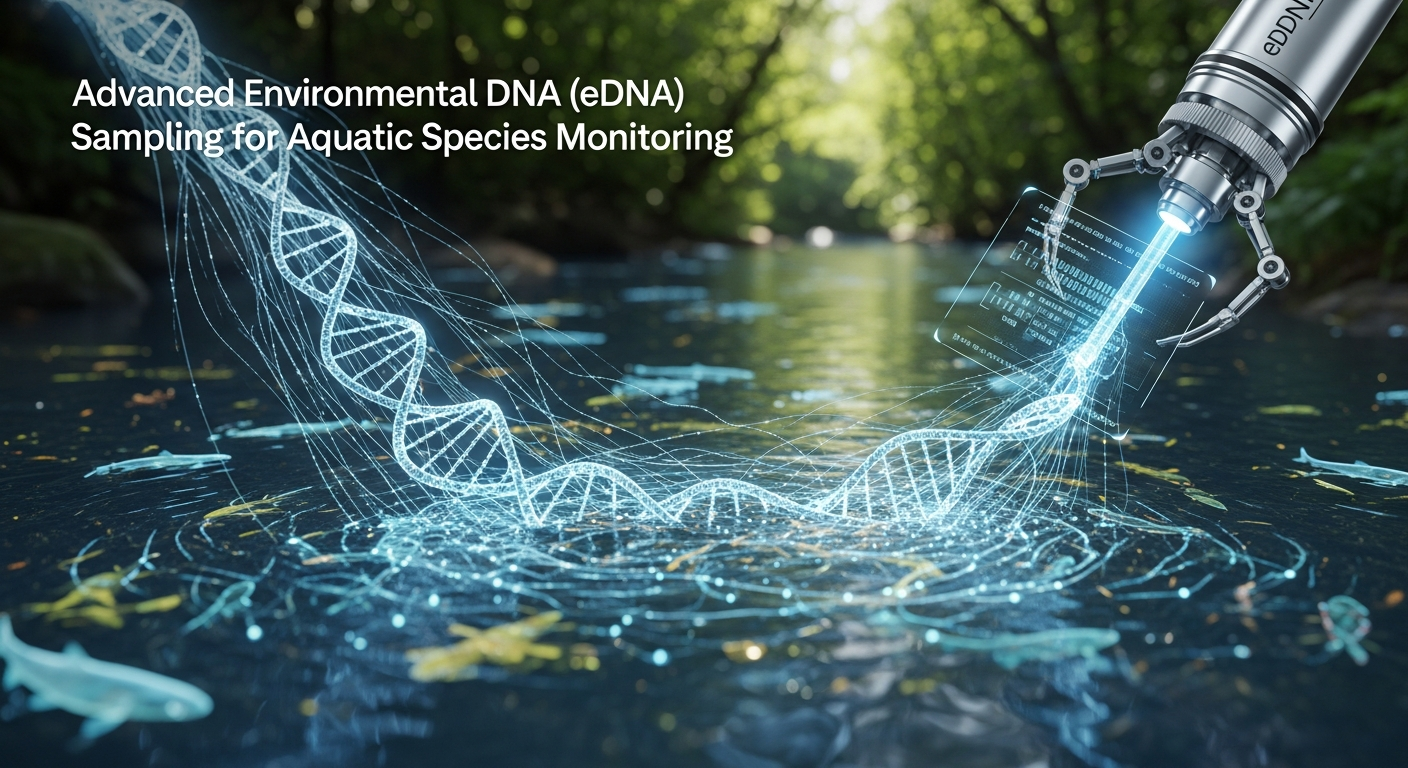
Course Title: Advanced Environmental DNA (eDNA) Sampling for Aquatic Species Monitoring
Executive Summary
This intensive two-week training course on Environmental DNA (eDNA) Sampling for Aquatic Species is designed to equip environmental professionals, biologists, and resource managers with the cutting-edge technical skills required for non-invasive biodiversity monitoring. As traditional aquatic survey methods are often invasive, costly, and labor-intensive, eDNA offers a revolutionary alternative for detecting rare, endangered, or invasive species through genetic traces left in water. The program covers the entire workflow from survey design and sterile sampling techniques to sample preservation and the interpretation of molecular data. Participants will engage in rigorous field simulations and laboratory overview sessions to master contamination control and chain-of-custody protocols. By integrating theoretical foundations with practical application, this course ensures that attendees can independently design and execute robust eDNA monitoring programs. Graduates will return to their organizations ready to implement cost-effective, high-sensitivity monitoring solutions that align with international scientific standards and regulatory requirements.
Introduction
The monitoring of aquatic ecosystems is undergoing a paradigm shift with the advent of Environmental DNA (eDNA) analysis. This molecular technique allows scientists and managers to detect the presence of species—ranging from microbes to mammals—simply by collecting water samples containing cellular debris such as mucus, feces, or skin cells. For organizations tasked with biodiversity conservation, fisheries management, and environmental impact assessments, eDNA represents a powerful tool for early detection of invasive species and monitoring of elusive endangered populations.The ‘Advanced Environmental DNA (eDNA) Sampling for Aquatic Species Monitoring’ course provides a comprehensive deep-dive into the practicalities of this methodology. While the science behind eDNA is complex, the success of any molecular monitoring program rests heavily on the quality of the field sampling. Contamination, degradation, and improper study design can lead to false positives or negatives, rendering data useless. Therefore, this course places a heavy emphasis on field protocols, sterility, and experimental design.Participants will explore the physics and biology of DNA in aquatic environments, learning how factors like flow rate, temperature, and UV radiation affect detection probabilities. The curriculum moves beyond basic water collection, addressing sediment sampling, filtering technologies, and the logistical challenges of remote fieldwork. By bridging the gap between field ecology and molecular biology, the course empowers professionals to communicate effectively with genetic laboratories and interpret results with confidence. Ultimately, this training builds the capacity for institutions to adopt next-generation monitoring systems that provide faster, more accurate data for decision-making in aquatic resource management.
Course Outcomes
- Design robust eDNA sampling strategies tailored to specific aquatic environments.
- Master sterile field techniques to prevent sample cross-contamination.
- Apply appropriate filtration and preservation methods to maximize DNA yield.
- Understand the chain-of-custody and metadata requirements for scientific validity.
- Interpret eDNA results, including qPCR and metabarcoding datasets.
- Evaluate the limitations and sources of error in eDNA surveys.
- Develop standard operating procedures (SOPs) for institutional eDNA monitoring.
Training Methodologies
- Expert-led lectures on molecular ecology fundamentals.
- Hands-on field simulations for sterile water sampling.
- Laboratory demonstrations of filtration and preservation.
- Case study analysis of successful eDNA projects.
- Group workshops on survey design and logistics.
- Data interpretation exercises using real-world datasets.
- Peer review sessions for developing institutional action plans.
Benefits to Participants
- Acquisition of specialized technical skills in molecular sampling.
- Enhanced ability to conduct non-invasive aquatic surveys.
- Certification in international eDNA field standards.
- Improved capacity to manage environmental projects and vendors.
- Networking opportunities with molecular ecologists and peers.
- Access to templates for protocols and field datasheets.
- Confidence in interpreting complex genetic monitoring reports.
Benefits to Sending Organization
- Adoption of cost-effective, high-sensitivity monitoring technologies.
- Early detection capabilities for invasive aquatic species.
- Non-invasive monitoring solutions for protected or endangered species.
- Enhanced scientific credibility and data accuracy.
- Streamlined regulatory compliance for environmental assessments.
- Reduction in field labor hours compared to traditional netting/trapping.
- In-house capacity to design and oversee molecular monitoring contracts.
Target Participants
- Marine and Freshwater Biologists.
- Environmental Impact Assessment Consultants.
- Fisheries Managers and Officers.
- Conservation Project Managers.
- Water Quality Technicians.
- Ecological Researchers and Academics.
- Regulatory Agency Inspectors.
Week 1: Foundations, Design, and Field Protocols
Module 1: Fundamentals of eDNA Science
- Introduction to Environmental DNA: Sources and persistence.
- Comparison of eDNA vs. traditional survey methods.
- The ecology of DNA: Transport, degradation, and detection.
- Targeted detection (qPCR) vs. Community analysis (Metabarcoding).
- Applications in conservation, biosecurity, and industry.
- Ethical considerations and regulatory landscape.
- Case studies: Success stories in aquatic monitoring.
Module 2: Survey Design and Strategy
- Defining study objectives: Presence/Absence vs. Quantification.
- Site selection and spatial sampling strategies.
- Determining sample volume and replication requirements.
- Accounting for environmental covariates (temperature, flow, pH).
- Designing negative and positive field controls.
- Statistical considerations for occupancy modeling.
- Workshop: Designing a sampling plan for a specific scenario.
Module 3: Equipment, Sterility, and Contamination Control
- Overview of sampling equipment: Pumps, filters, and syringes.
- Decontamination protocols: Bleach, UV, and autoclaving.
- Personal Protective Equipment (PPE) for genetic work.
- identifying sources of contamination in the field.
- Preparation of sampling kits and reagents.
- Waste management and environmental safety.
- Practical Demo: Setting up a sterile field station.
Module 4: Field Sampling Techniques (Lotic & Lentic)
- Sampling protocols for flowing waters (rivers/streams).
- Sampling protocols for standing waters (lakes/ponds).
- Sampling in marine and coastal environments.
- Water column vs. Sediment sampling techniques.
- Handling turbidity and clogging issues.
- Techniques for depth sampling.
- Field Simulation: Executing a sterile water collection.
Module 5: Sample Processing and Preservation
- Filtration methods: Peristaltic pumps vs. syringe filters.
- Preservation buffers: Ethanol, Longmire’s, and others.
- Cold chain management and storage requirements.
- Labeling, barcoding, and sample tracking.
- Digital metadata collection and field datasheets.
- Shipping regulations for biological samples.
- Review: Common mistakes in sample preservation.
Week 2: Advanced Analysis, Data, and Implementation
Module 6: From Field to Lab – The Analytical Workflow
- Overview of DNA extraction processes in the lab.
- Inhibition testing and quality control steps.
- Understanding PCR and library preparation concepts.
- Selection of genetic markers (primers) for target species.
- LOD (Limit of Detection) and LOQ (Limit of Quantification).
- Communicating with genetic laboratories.
- Lab Tour or Virtual Lab Walkthrough.
Module 7: Data Management and Bioinformatics Basics
- Introduction to bioinformatics pipelines (conceptual).
- Reference databases (GenBank, BOLD) and their importance.
- Sequence matching and taxonomic assignment.
- Filtering noise and handling ambiguous data.
- Data storage security and formats.
- Visualizing eDNA data: Heatmaps and community plots.
- Hands-on: Basic interpretation of a sequencing report.
Module 8: Interpreting Results and Ecological Inference
- Differentiating live signals from dead/transported DNA.
- Correlating eDNA concentration with biomass/abundance.
- Understanding false positives and false negatives.
- Seasonal and spatial variability in detection.
- Integrating eDNA data with traditional survey data.
- Making management decisions based on genetic evidence.
- Group Analysis: Interpreting conflicting data scenarios.
Module 9: Advanced Applications and Emerging Technologies
- eDNA for invasive species early warning systems.
- Monitoring cryptic and endangered species.
- eRNA and functional genomics: Assessing ecosystem health.
- Automated samplers and autonomous underwater vehicles.
- Citizen science integration in eDNA projects.
- Future trends in on-site sequencing devices (e.g., MinION).
- Discussion: The future of aquatic monitoring.
Module 10: Capstone Project and Implementation Strategy
- Synthesizing the course learnings.
- Drafting Standard Operating Procedures (SOPs).
- Budgeting for eDNA projects (equipment, labor, lab fees).
- Risk assessment for eDNA implementation.
- Presentation of participant Action Plans.
- Course review and feedback session.
- Closing ceremony and certification.
Action Plan for Implementation
- Conduct a needs assessment to identify priority species for eDNA monitoring.
- Procure necessary sampling equipment and establish a sterile preparation area.
- Develop and document strict institutional SOPs for field sampling and safety.
- Execute a pilot study to validate protocols before full-scale rollout.
- Establish partnerships with accredited genetic laboratories for sample processing.
- Integrate eDNA data into existing environmental management databases.
- Schedule quarterly reviews to update protocols based on new scientific literature.
Course Features
- Lecture 0
- Quiz 0
- Skill level All levels
- Students 0
- Certificate No
- Assessments Self

You May Like

Advanced Population Ecology and Demographics
Course Title: Advanced Population Ecology and Demographics Executive Summary This intensive two-week course on Advanced Population Ecology and Demographics equips participants with advanced quantitative and...

Applied Conservation Genetics for Species Management
Course Title: Applied Conservation Genetics for Species Management Executive Summary This two-week intensive course on Applied Conservation Genetics for Species Management bridges the gap between...

Threatened Species Recovery and Reintroduction Programs
Course Title: Threatened Species Recovery and Reintroduction Programs Executive Summary This intensive two-week course provides a comprehensive framework for designing, implementing, and managing recovery plans...

Landscape Ecology and Connectivity Science Training Course
Course Title: Landscape Ecology and Connectivity Science Training Course Executive Summary This intensive two-week executive course on Landscape Ecology and Connectivity Science is designed to...

Biodiversity Hotspot Conservation and Management
Course Title: Biodiversity Hotspot Conservation and Management Executive Summary This intensive two-week course on Biodiversity Hotspot Conservation and Management equips participants with the knowledge and...




