
Applied Herpetology and Venom Management Training Course
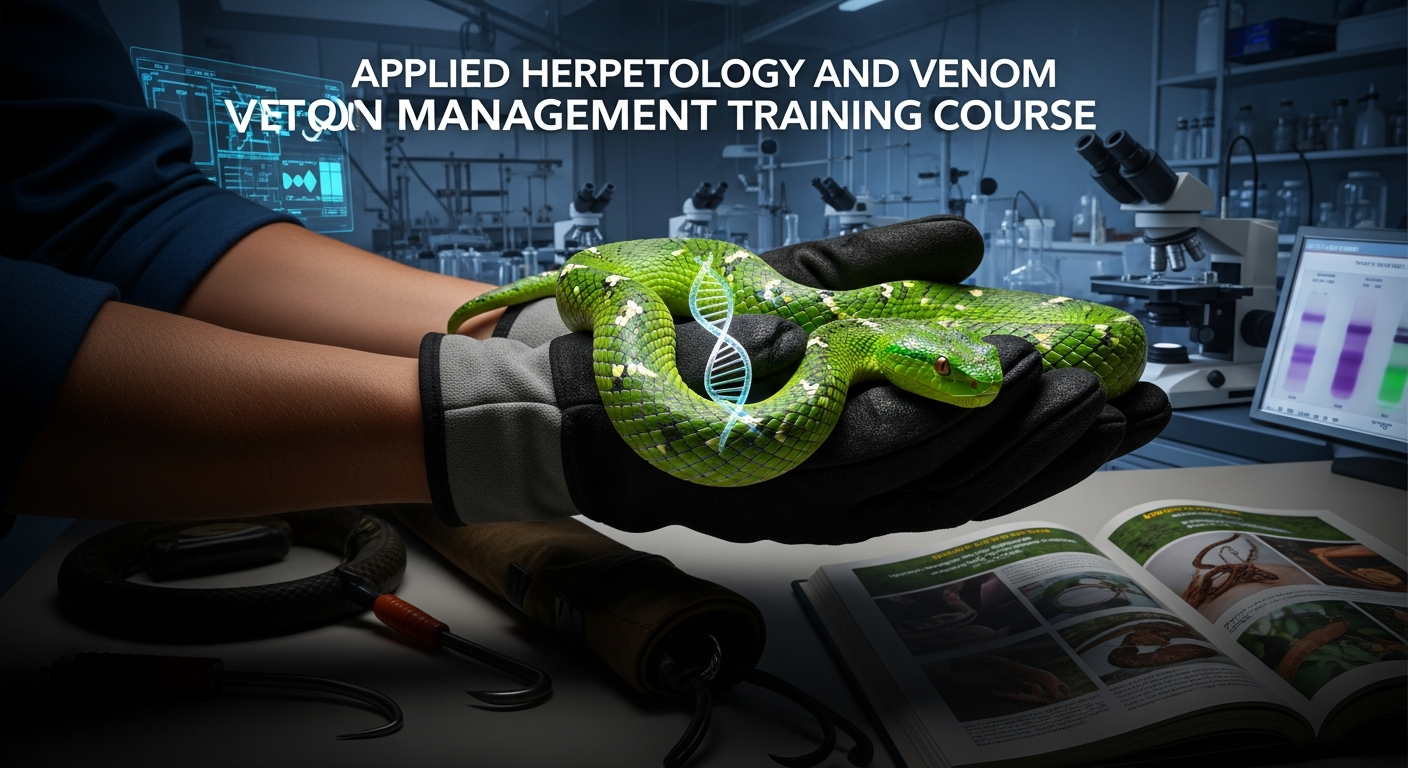
Course Title: Applied Herpetology and Venom Management Training Course
Executive Summary
This intensive two-week course on Applied Herpetology and Venom Management equips participants with comprehensive knowledge and practical skills in snake identification, venom extraction, snakebite management, and conservation strategies. Participants will learn from experienced herpetologists, toxicologists, and medical professionals through a blend of lectures, hands-on exercises, and field simulations. Emphasis is placed on safe handling techniques, venom composition, clinical effects of envenomation, and treatment protocols. The course also covers legal and ethical considerations, community engagement, and sustainable conservation practices. Graduates will be prepared to contribute to snakebite prevention, research, and conservation efforts in diverse settings, promoting human-wildlife coexistence.
Introduction
Herpetology, the study of reptiles and amphibians, plays a crucial role in understanding biodiversity, ecosystem health, and human-wildlife interactions. Venomous snakes pose a significant public health challenge in many regions, necessitating specialized knowledge and skills for effective snakebite management. This Applied Herpetology and Venom Management Training Course provides a comprehensive foundation in herpetology, with a focus on venomous snakes and their venoms. Participants will gain expertise in snake identification, safe handling techniques, venom extraction protocols, and the clinical management of snakebite envenomation. The course integrates theoretical knowledge with practical exercises, including venom collection, antivenom production principles, and simulated snakebite scenarios. Emphasis is placed on evidence-based approaches to snakebite treatment, community education, and conservation strategies that promote the well-being of both humans and reptiles. This course aims to empower professionals to contribute to snakebite mitigation, herpetological research, and the sustainable conservation of reptile populations.
Course Outcomes
- Identify and classify diverse reptile and amphibian species.
- Apply safe handling techniques for venomous and non-venomous snakes.
- Understand the composition, action, and clinical effects of snake venoms.
- Implement appropriate first aid and medical management protocols for snakebite envenomation.
- Conduct venom extraction and processing for research and antivenom production.
- Develop and implement community education programs on snakebite prevention.
- Contribute to the conservation of reptile and amphibian populations and their habitats.
Training Methodologies
- Interactive lectures and presentations by expert herpetologists and toxicologists.
- Hands-on training in snake identification, handling, and venom extraction techniques.
- Laboratory sessions on venom analysis and antivenom production principles.
- Simulated snakebite scenarios and medical management exercises.
- Field trips to observe reptiles and amphibians in their natural habitats.
- Case study analysis of snakebite incidents and treatment outcomes.
- Group discussions and presentations on relevant herpetological and venom management topics.
Benefits to Participants
- Comprehensive knowledge of herpetology and venom management principles.
- Practical skills in snake identification, handling, and venom extraction.
- Enhanced understanding of snakebite envenomation and its clinical management.
- Confidence in providing first aid and medical care for snakebite victims.
- Networking opportunities with leading herpetologists and medical professionals.
- Improved ability to contribute to snakebite prevention and conservation efforts.
- Career advancement opportunities in herpetology, toxicology, and related fields.
Benefits to Sending Organization
- Enhanced capacity in snakebite management and prevention.
- Improved public health outcomes through effective snakebite treatment.
- Increased expertise in herpetological research and conservation.
- Strengthened community relations through education and outreach programs.
- Enhanced reputation as a leader in herpetological research and conservation.
- Greater ability to attract funding for herpetological and venom management projects.
- Improved compliance with relevant regulations and ethical guidelines.
Target Participants
- Medical doctors and nurses working in snakebite-prone areas.
- Wildlife biologists and conservationists.
- Veterinarians and animal handlers.
- Researchers in herpetology and toxicology.
- Public health officials and community health workers.
- Zookeepers and reptile enthusiasts.
- Ecotourism guides and outdoor professionals.
Week 1: Foundations of Herpetology and Venom
Module 1: Introduction to Herpetology
- Overview of reptile and amphibian biology and evolution.
- Classification and taxonomy of major reptile and amphibian groups.
- Anatomy and physiology of snakes, lizards, turtles, and amphibians.
- Ecology and behavior of reptiles and amphibians.
- Global distribution patterns and biodiversity hotspots.
- Conservation status and threats to reptile and amphibian populations.
- Ethical considerations in herpetological research and conservation.
Module 2: Snake Identification and Handling
- Identification of common venomous and non-venomous snakes in different regions.
- Morphological characteristics used for snake identification.
- Safe handling techniques for venomous and non-venomous snakes.
- Use of snake hooks, tongs, and other handling equipment.
- Risk assessment and safety protocols for working with snakes.
- First aid procedures for snakebites.
- Legal regulations and permits for handling protected species.
Module 3: Venomous Snakes and Venom Composition
- Classification of venomous snakes based on venom type.
- Composition and properties of snake venoms (enzymes, toxins).
- Mechanisms of venom action on the body (neurotoxic, hemotoxic, cytotoxic).
- Factors affecting venom toxicity and potency.
- Geographic variation in venom composition within species.
- Evolutionary significance of venom.
- Methods for venom collection and storage.
Module 4: Clinical Effects of Snakebite Envenomation
- Local and systemic effects of snakebite envenomation.
- Symptoms and signs of envenomation by different snake species.
- Grading systems for assessing the severity of snakebite.
- Differential diagnosis of snakebite from other medical conditions.
- Laboratory investigations for confirming envenomation.
- Complications of snakebite (e.g., bleeding, kidney failure, neurotoxicity).
- Prognosis and long-term outcomes of snakebite victims.
Module 5: First Aid and Medical Management of Snakebite
- Immediate first aid measures for snakebite victims (pressure immobilization).
- Wound care and prevention of infection.
- Fluid resuscitation and supportive care.
- Antivenom therapy: types, administration, and side effects.
- Management of specific complications (e.g., respiratory failure, coagulopathy).
- Surgical interventions for snakebite injuries.
- Rehabilitation and psychological support for snakebite survivors.
Week 2: Advanced Venom Management and Conservation
Module 6: Venom Extraction and Processing
- Advanced techniques for venom extraction from different snake species.
- Collection and processing of venom for research and antivenom production.
- Lyophilization and storage of venom for long-term preservation.
- Quality control and standardization of venom samples.
- Ethical considerations in venom collection.
- Safety precautions for working with venom.
- Regulations governing the handling and transport of venomous substances.
Module 7: Antivenom Production and Quality Control
- Principles of antivenom production (immunization of animals, antibody purification).
- Types of antivenom (monovalent, polyvalent, whole IgG, F(ab’)2).
- Factors affecting antivenom efficacy and safety.
- Quality control testing of antivenom (potency, sterility, pyrogenicity).
- Storage and distribution of antivenom.
- Adverse reactions to antivenom and their management.
- Future directions in antivenom research and development.
Module 8: Snakebite Epidemiology and Prevention
- Global distribution of snakebite incidence and mortality.
- Risk factors for snakebite (occupation, location, behavior).
- Community-based strategies for snakebite prevention.
- Education programs on snake identification, safety, and first aid.
- Environmental modifications to reduce snake-human conflict.
- Access to antivenom and healthcare services in rural areas.
- Policy and advocacy for snakebite prevention and treatment.
Module 9: Reptile Conservation and Habitat Management
- Threats to reptile populations (habitat loss, overexploitation, climate change).
- Conservation strategies for reptiles (protected areas, captive breeding).
- Habitat management techniques to benefit reptiles and amphibians.
- Role of community involvement in reptile conservation.
- Sustainable use of reptiles for ecotourism and traditional medicine.
- Legal frameworks for reptile protection.
- Monitoring and research programs to assess reptile populations.
Module 10: Community Engagement and Education
- Developing effective community education programs on snakebite prevention.
- Communication strategies for conveying accurate information about snakes.
- Addressing misconceptions and fears about snakes.
- Building trust and collaboration with local communities.
- Involving communities in reptile conservation efforts.
- Using participatory approaches to identify local solutions to snakebite problems.
- Evaluating the impact of community education programs.
Action Plan for Implementation
- Conduct a needs assessment to identify gaps in snakebite management and herpetological expertise.
- Develop a comprehensive snakebite management plan based on evidence-based guidelines.
- Establish a network of trained professionals to provide snakebite treatment and prevention services.
- Implement community education programs on snake identification, safety, and first aid.
- Strengthen collaboration between healthcare providers, conservation organizations, and local communities.
- Monitor snakebite incidence and mortality rates to evaluate the effectiveness of interventions.
- Advocate for policies and resources to support snakebite management and reptile conservation.
Course Features
- Lecture 0
- Quiz 0
- Skill level All levels
- Students 0
- Certificate No
- Assessments Self

You May Like

Advanced Population Ecology and Demographics
Course Title: Advanced Population Ecology and Demographics Executive Summary This intensive two-week course on Advanced Population Ecology and Demographics equips participants with advanced quantitative and...

Applied Conservation Genetics for Species Management
Course Title: Applied Conservation Genetics for Species Management Executive Summary This two-week intensive course on Applied Conservation Genetics for Species Management bridges the gap between...

Threatened Species Recovery and Reintroduction Programs
Course Title: Threatened Species Recovery and Reintroduction Programs Executive Summary This intensive two-week course provides a comprehensive framework for designing, implementing, and managing recovery plans...

Landscape Ecology and Connectivity Science Training Course
Course Title: Landscape Ecology and Connectivity Science Training Course Executive Summary This intensive two-week executive course on Landscape Ecology and Connectivity Science is designed to...

Biodiversity Hotspot Conservation and Management
Course Title: Biodiversity Hotspot Conservation and Management Executive Summary This intensive two-week course on Biodiversity Hotspot Conservation and Management equips participants with the knowledge and...




