
Automated Identification of Species Using AI: From Theory to Field Deployment
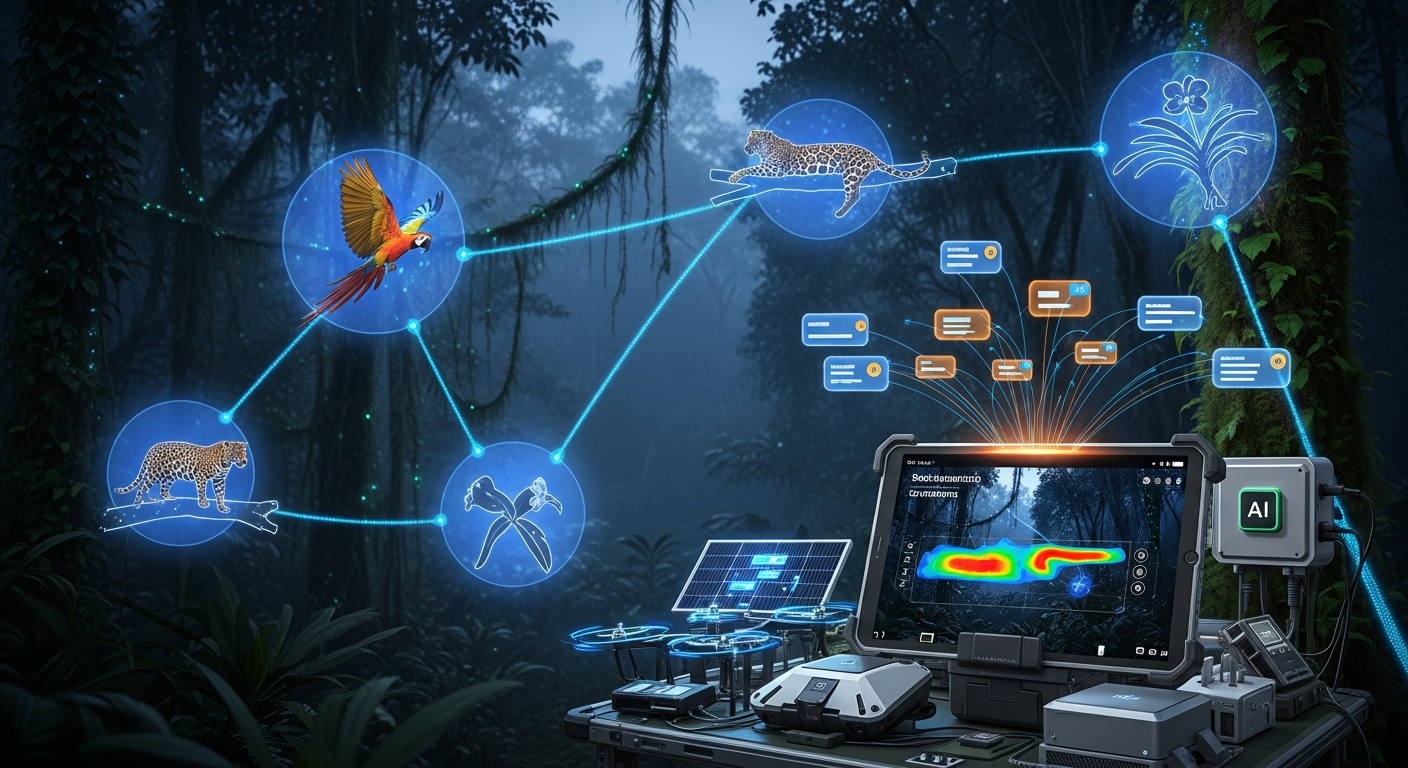
Course Title: Automated Identification of Species Using AI: From Theory to Field Deployment
Executive Summary
This intensive two-week executive course on Automated Identification of Species using AI is designed to bridge the critical gap between biodiversity conservation and artificial intelligence. As the global biodiversity crisis accelerates, traditional manual taxonomy cannot keep pace with the need for rapid species monitoring. This program equips participants with the technical skills to leverage computer vision and machine learning for identifying flora and fauna from images and audio recordings. Through a blend of theoretical instruction and hands-on technical labs, attendees will learn the end-to-end pipeline: from data curation and annotation to training Convolutional Neural Networks (CNNs) and deploying models on edge devices. By integrating open-source tools and cutting-edge algorithms, the course empowers professionals to scale up biodiversity monitoring efforts. Graduates will return to their organizations capable of designing automated identification systems that enhance data accuracy, reduce survey costs, and support evidence-based conservation policy.
Introduction
The rapid decline of global biodiversity has created an urgent need for efficient, scalable monitoring solutions. Traditional methods of species identification—relying heavily on expert taxonomists and manual field surveys—are often time-consuming, expensive, and difficult to scale across vast landscapes. Artificial Intelligence, specifically deep learning and computer vision, has emerged as a transformative tool in this domain, enabling the automated recognition of species through camera trap images, drone footage, and bioacoustic recordings.The Automated Identification of Species using AI course is a specialized training program designed for conservationists, researchers, and technical professionals seeking to modernize ecological monitoring. Over the course of two weeks, participants will dive deep into the workflow of applied AI for ecology. The curriculum is structured to demystify machine learning concepts for non-computer scientists while providing advanced techniques for data professionals.Participants will explore how to curate training datasets, utilize platforms like iNaturalist and GBIF, and train custom models using transfer learning techniques. Beyond static images, the course addresses the growing field of bioacoustics, teaching methods to identify species via sound. Crucially, the program emphasizes practical application, covering the deployment of models to ‘edge’ devices like smartphones and Raspberry Pi units for real-time identification in the field. By the end of this training, professionals will possess a robust understanding of AI’s potential and limitations, ready to implement automated systems that revolutionize how their organizations track and protect biodiversity.
Course Outcomes
- Design and implement end-to-end AI pipelines for species identification.
- Curate, annotate, and preprocess biological image and audio datasets.
- Apply transfer learning to train Convolutional Neural Networks (CNNs) for specific taxa.
- Evaluate model performance using precision, recall, and confusion matrices.
- Deploy trained models to edge devices and mobile applications for field use.
- Analyze bioacoustic data to automate the identification of vocalizing species.
- Navigate ethical considerations and bias in AI-driven ecological monitoring.
Training Methodologies
- Interactive lectures on AI theory and ecological applications.
- Hands-on coding labs using Python and no-code AI platforms.
- Field data collection exercises using camera traps and audio recorders.
- Data annotation workshops using standard computer vision tools.
- collaborative group projects building custom species classifiers.
- Case study analysis of successful AI conservation projects.
- Capstone project presentation of a working identification prototype.
Benefits to Participants
- Mastery of high-demand technical skills in AI and machine learning.
- Ability to automate tedious identification tasks, saving hundreds of work hours.
- Enhanced career profile bridging ecology and data science.
- Access to a library of open-source tools and pre-trained models.
- Practical experience with hardware deployment for remote sensing.
- Networking with peers at the intersection of tech and conservation.
- Certification in Applied AI for Biodiversity Monitoring.
Benefits to Sending Organization
- Drastic reduction in time and cost for biological surveys.
- Scalable monitoring capacity across larger geographic areas.
- Standardized data collection reducing human observer bias.
- Rapid processing of legacy data backlogs (images/audio).
- Improved data accuracy for reporting and policy formulation.
- Modernization of institutional workflows and technical capacity.
- Enhanced ability to secure funding for innovative conservation tech projects.
Target Participants
- Conservation Biologists and Ecologists.
- Taxonomists and Museum Curators.
- Data Scientists in Environmental Sectors.
- Park Rangers and Protected Area Managers.
- Environmental Impact Assessment Consultants.
- Forestry and Agriculture Officers.
- Researchers in Bioacoustics and Remote Sensing.
WEEK 1: Data Foundations and Computer Vision Principles
Module 1 – Introduction to AI in Biodiversity
- Overview of AI, Machine Learning, and Deep Learning.
- History of automated species ID (from morphometrics to CNNs).
- Review of existing tools: Merlin, iNaturalist, PlantNet.
- Defining the problem: Classification vs. Detection.
- The Machine Learning lifecycle in ecology.
- Hardware requirements: GPUs, cloud computing, and edge devices.
- Case study: AI for anti-poaching and invasive species tracking.
Module 2 – Data Collection and Management
- Sourcing data: GBIF, citizen science, and museum archives.
- Protocols for field data collection (camera traps, drones).
- Importance of metadata and taxonomy backbones.
- Handling data imbalance (rare vs. common species).
- Data storage solutions and version control.
- Legal and ethical usage of biodiversity data.
- Lab: Scaping and organizing a training dataset.
Module 3 – Image Pre-processing and Annotation
- Understanding digital images: Pixels, channels, and resolution.
- Tools for annotation: CVAT, LabelImg, and MegaDetector.
- Bounding boxes, polygons, and semantic segmentation.
- Data augmentation techniques to reduce overfitting.
- Cleaning data: Removing blurred or empty images.
- Standardizing image formats for model ingestion.
- Practical exercise: Annotating a 500-image dataset.
Module 4 – Fundamentals of Convolutional Neural Networks (CNNs)
- Architecture of a CNN: Layers, filters, and pooling.
- How machines ‘see’: Feature extraction visualization.
- Introduction to Transfer Learning (ResNet, MobileNet, EfficientNet).
- Why Transfer Learning is crucial for small ecological datasets.
- Hyperparameters: Learning rate, batch size, and epochs.
- Loss functions and optimization algorithms.
- Demo: Visualizing activations in a pre-trained network.
Module 5 – Training Your First Classifier
- Setting up the environment: Python, PyTorch/TensorFlow, or GUIs.
- Loading and splitting data (Train, Validation, Test).
- Fine-tuning a pre-trained model on custom data.
- Monitoring training progress and learning curves.
- Troubleshooting common errors: Overfitting and underfitting.
- Saving and checkpointing models.
- Lab: Training a simple 10-species butterfly classifier.
WEEK 2: Advanced Techniques, Bioacoustics, and Deployment
Module 6 – Model Evaluation and Refinement
- Beyond accuracy: Precision, Recall, and F1-Score.
- Interpreting Confusion Matrices to identify taxonomic confusion.
- Confidence thresholds and handling ‘Unknown’ classes.
- Cross-validation techniques for robust assessment.
- Visualizing errors: Grad-CAM and saliency maps.
- Strategies to improve model performance.
- Exercise: Auditing the model trained in Week 1.
Module 7 – Introduction to Bioacoustics AI
- Physics of sound and digital audio representation.
- Converting audio to images: Spectrograms and Mel-frequency cepstral coefficients.
- Differences between image and audio classification pipelines.
- Tools for audio analysis: Audacity, Raven, and Kaleidoscope.
- BirdNET and other acoustic foundation models.
- Handling background noise and overlapping calls.
- Lab: Processing audio files and generating spectrograms.
Module 8 – Object Detection and Counting
- Difference between Classification (What?) and Detection (Where?).
- Architectures for detection: YOLO (You Only Look Once) and R-CNN.
- Counting individuals in dense aggregations (e.g., bird colonies).
- Video processing: Tracking animals across frames.
- Annotating for detection vs. classification.
- Performance metrics for detection (IoU, mAP).
- Simulation: Training a model to count animals in camera trap images.
Module 9 – Deployment and Edge Computing
- Model compression: Quantization and pruning.
- Converting models for mobile: TFLite and ONNX.
- Deploying to Raspberry Pi and Jetson Nano.
- Offline vs. Online inference workflows.
- Building a simple interface for field users.
- Power management for remote AI sensors.
- Hands-on: Running a model on a smartphone or edge device.
Module 10 – Capstone Project and Future Trends
- Integration of AI into existing monitoring workflows.
- Emerging trends: DNA barcoding combined with AI.
- Global collaboration and model sharing.
- Presentation of Capstone Projects (Custom AI Solution).
- Peer review and feedback session.
- Finalizing the implementation strategy.
- Course wrap-up and certification ceremony.
Action Plan for Implementation
- Identify a specific species monitoring bottleneck within the organization.
- Secure necessary hardware (camera traps/recorders) and compute resources.
- Form a cross-functional team (ecologist + IT specialist) for the pilot.
- Curate a pilot dataset of 1,000+ labeled images or audio clips.
- Train and validate a baseline model using the course frameworks.
- Conduct a field trial to compare AI results against manual identification.
- Present cost-benefit analysis of the AI system to senior leadership.
Course Features
- Lecture 0
- Quiz 0
- Skill level All levels
- Students 0
- Certificate No
- Assessments Self

You May Like

Advanced Population Ecology and Demographics
Course Title: Advanced Population Ecology and Demographics Executive Summary This intensive two-week course on Advanced Population Ecology and Demographics equips participants with advanced quantitative and...

Applied Conservation Genetics for Species Management
Course Title: Applied Conservation Genetics for Species Management Executive Summary This two-week intensive course on Applied Conservation Genetics for Species Management bridges the gap between...

Threatened Species Recovery and Reintroduction Programs
Course Title: Threatened Species Recovery and Reintroduction Programs Executive Summary This intensive two-week course provides a comprehensive framework for designing, implementing, and managing recovery plans...

Landscape Ecology and Connectivity Science Training Course
Course Title: Landscape Ecology and Connectivity Science Training Course Executive Summary This intensive two-week executive course on Landscape Ecology and Connectivity Science is designed to...

Biodiversity Hotspot Conservation and Management
Course Title: Biodiversity Hotspot Conservation and Management Executive Summary This intensive two-week course on Biodiversity Hotspot Conservation and Management equips participants with the knowledge and...




