
Wildlife Forensic Science for Crime Investigation Training Course
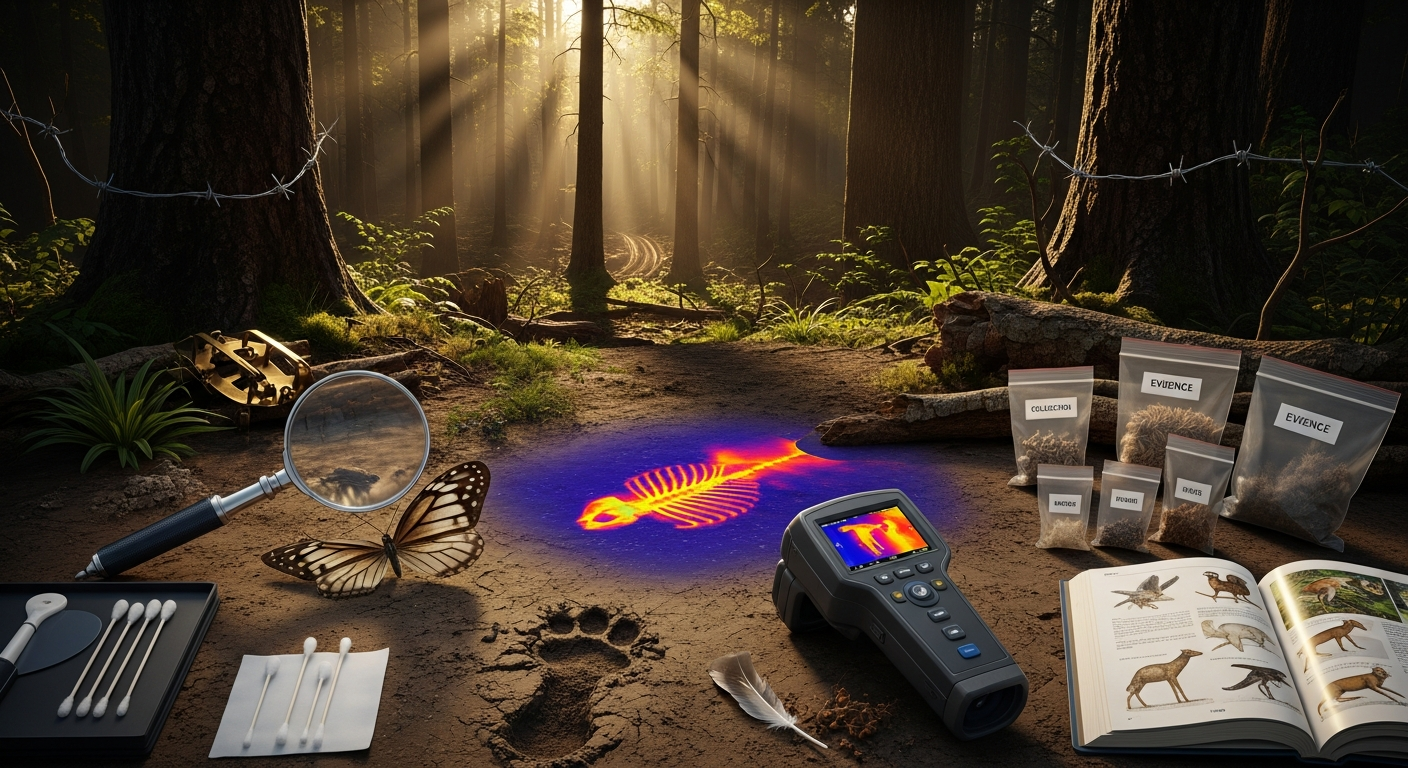
Course Title: Wildlife Forensic Science for Crime Investigation Training Course
Executive Summary
This intensive two-week training course on Wildlife Forensic Science for Crime Investigation is designed to equip law enforcement officers, wildlife managers, and legal professionals with the specialized scientific skills necessary to combat the illegal wildlife trade. As wildlife crime becomes increasingly sophisticated and transnational, traditional policing methods must be augmented by rigorous forensic application. This course covers the entire evidentiary chain—from the meticulous management of crime scenes and the preservation of biological samples to laboratory analysis and the presentation of expert testimony in court. By integrating biological sciences, criminalistics, and legal standards, participants will learn to secure convictions through irrefutable scientific evidence. The curriculum addresses global standards, including CITES regulations, and emphasizes the critical importance of the chain of custody. Graduates will emerge as competent practitioners capable of bridging the gap between the field and the forensic laboratory, ensuring that justice is served for wildlife crimes.
Introduction
The illegal wildlife trade constitutes one of the largest transnational organized crime activities globally, threatening biodiversity, national security, and economic stability. However, investigations often fail to result in convictions due to the mishandling of evidence, lack of scientific identification, or procedural errors that render evidence inadmissible in court. To address these challenges, the Wildlife Forensic Science for Crime Investigation course provides a comprehensive framework for applying scientific methods to legal problems involving wildlife.This course moves beyond basic enforcement theory to provide hands-on technical training. Participants will explore the unique challenges of wildlife crime scenes, which often occur in remote, uncontrolled environments involving decomposing carcasses or dangerous animals. The curriculum delves into morphological and molecular species identification, the pathology of poaching methods (traps, poison, ballistics), and the emerging field of digital forensics in wildlife trafficking. Crucially, the course bridges the gap between science and law, training participants on how to interpret laboratory results and present complex scientific data clearly to prosecutors and judges.Drawing on best practices from international forensic societies and enforcement agencies, the training utilizes mock crime scenes, laboratory demonstrations, and moot court simulations. It emphasizes the ‘Chain of Custody’ as the backbone of forensic integrity. By the end of the program, participants will possess the confidence to manage complex investigations, utilize forensic resources effectively, and build robust cases that withstand the scrutiny of defense attorneys, ultimately disrupting criminal networks and protecting endangered species.
Course Outcomes
- Master the protocols for securing, documenting, and processing wildlife crime scenes.
- Apply morphological and molecular techniques for accurate species identification.
- Maintain an unbroken chain of custody to ensure legal admissibility of evidence.
- Analyze wound patterns and pathology to determine cause and time of death.
- Utilize digital forensics to link suspects to illegal trade networks.
- Compose comprehensive expert witness reports for legal proceedings.
- Navigate international legal frameworks and CITES regulations regarding wildlife evidence.
Training Methodologies
- Interactive lectures on forensic theory and legal standards.
- Simulated outdoor crime scene processing and evidence recovery.
- Laboratory demonstrations of DNA extraction and morphological analysis.
- Case study reviews of successful and failed prosecutions.
- Moot court exercises for cross-examination preparation.
- Hands-on workshops using forensic field kits and equipment.
- Peer-to-peer learning and investigative strategy sessions.
Benefits to Participants
- Acquisition of specialized technical skills in forensic science.
- Increased confidence in handling biological and physical evidence.
- Enhanced ability to present scientific findings in a court of law.
- Access to a network of forensic experts and enforcement peers.
- Practical knowledge of modern forensic tools and field kits.
- Career advancement through specialized investigative certification.
- Improved capacity to secure convictions in complex wildlife cases.
Benefits to Sending Organization
- Higher success rates in prosecution and conviction of wildlife criminals.
- Standardized operating procedures for evidence handling across the agency.
- Enhanced reputation for scientific rigor and professional integrity.
- Improved inter-agency cooperation and resource utilization.
- Reduction in dismissed cases due to procedural technicalities.
- Strengthened institutional capacity for monitoring and enforcement.
- Increased deterrence effect against organized poaching networks.
Target Participants
- Senior Wildlife Crime Investigators.
- Forensic Analysts and Laboratory Technicians.
- Public Prosecutors and Environmental Lawyers.
- Park Wardens and Ranger Unit Commanders.
- Customs and Border Control Officers.
- Police Officers in Environmental Protection Units.
- NGO Enforcement Support Officers.
WEEK 1: Forensic Foundations and Crime Scene Management
Module 1 – Principles of Wildlife Forensics
- Definition and scope of wildlife forensic science.
- The intersection of biology, law, and criminalistics.
- CITES Appendices and national legislation context.
- Ethics and impartiality in forensic investigation.
- Types of evidence: Biological, physical, and digital.
- The role of the forensic expert vs. the investigator.
- Case study: The impact of forensics on global trafficking.
Module 2 – Crime Scene Investigation (CSI) in the Wild
- Securing and protecting remote crime scenes.
- Systematic search patterns for vast terrain.
- Forensic photography and videography standards.
- Crime scene sketching and geospatial mapping (GPS).
- Health and safety: Zoonotic diseases and hazards.
- Equipment checklist for field investigators.
- Simulation: Setting up a perimeter and initial assessment.
Module 3 – Evidence Collection and Chain of Custody
- Protocols for collecting biological samples (blood, tissue).
- Handling trace evidence (hair, feathers, fibers).
- Packaging techniques to prevent degradation and contamination.
- Chain of Custody: Documentation from field to court.
- Labeling, sealing, and transport logistics.
- Storage requirements for different evidence types.
- Practical exercise: Evidence recovery and logging.
Module 4 – Species Identification Techniques
- Morphological identification: Bones, skins, and parts.
- Differentiating ivory, rhino horn, and look-alikes.
- Microscopic analysis of hair and feathers.
- Osteology basics: Human vs. non-human remains.
- Using identification guides and dichotomous keys.
- Limitations of visual ID and when to consult experts.
- Lab: Visual identification of seized contraband.
Module 5 – DNA and Molecular Forensics
- Introduction to DNA profiling and barcoding.
- Sample quality: Dealing with degraded DNA.
- The power of genetics: Species, sex, and individual ID.
- Geographic origin assignment (population genetics).
- Rapid field DNA test kits: Capabilities and limits.
- Understanding laboratory reports and match probabilities.
- Case discussion: Using DNA to link seizures to poaching sites.
WEEK 2: Advanced Analysis, Pathology, and Admissibility
Module 6 – Wildlife Pathology and Cause of Death
- Veterinary forensics: The animal necropsy.
- Distinguishing scavenging vs. predation vs. poaching.
- Ballistics in wildlife: Entry/exit wounds and caliber ID.
- Identifying signs of poisoning and pesticide use.
- Trauma analysis: Snares, traps, and blunt force.
- Estimating Post-Mortem Interval (Time of Death).
- Field exercise: Simulated carcass examination.
Module 7 – Non-Biological and Digital Forensics
- Ballistics matching and firearm tracing.
- Tool mark analysis on ivory and bones.
- Digital forensics: Mobile phones, GPS, and cameras.
- Cyber-enabled wildlife crime and online markets.
- Financial investigation and follow-the-money trails.
- Vehicle examination and concealment methods.
- Lab: Extracting data from seized digital devices.
Module 8 – Forensic Entomology and Toxicology
- Using insects to determine time of death.
- Life cycles of blowflies and beetles.
- Collection protocols for entomological evidence.
- Toxicology basics: Sample collection for poisons.
- Chain of evidence for chemical analysis.
- Environmental crime: Pollution and mass die-offs.
- Practical: Insect collection and preservation.
Module 9 – Reporting and Courtroom Testimony
- Writing the Expert Witness Statement.
- Translating scientific data for lay judges/juries.
- Visual aids: Charts, maps, and reconstructions.
- Preparation for cross-examination.
- Admissibility hearings and Daubert/Frye standards.
- Common defense strategies in wildlife cases.
- Simulation: Moot court testimony and cross-examination.
Module 10 – Strategic Application and Capstone
- Intelligence-led forensic strategies.
- Transnational cooperation (INTERPOL/WCO).
- Building a forensic database for the department.
- Managing cold cases with new forensic tech.
- Review of course key concepts.
- Capstone project: Full case simulation from scene to court.
- Action planning and certificate ceremony.
Action Plan for Implementation
- Conduct an internal audit of current evidence storage facilities.
- Procure essential forensic field kits for frontline staff.
- Develop Standard Operating Procedures (SOPs) for crime scenes.
- Establish a partnership with a certified forensic laboratory.
- Organize a cascade training session for junior officers.
- Implement a digital Chain of Custody logging system.
- Review case outcomes quarterly to assess forensic impact.
Course Features
- Lecture 0
- Quiz 0
- Skill level All levels
- Students 0
- Certificate No
- Assessments Self

You May Like

Advanced Population Ecology and Demographics
Course Title: Advanced Population Ecology and Demographics Executive Summary This intensive two-week course on Advanced Population Ecology and Demographics equips participants with advanced quantitative and...

Applied Conservation Genetics for Species Management
Course Title: Applied Conservation Genetics for Species Management Executive Summary This two-week intensive course on Applied Conservation Genetics for Species Management bridges the gap between...

Threatened Species Recovery and Reintroduction Programs
Course Title: Threatened Species Recovery and Reintroduction Programs Executive Summary This intensive two-week course provides a comprehensive framework for designing, implementing, and managing recovery plans...

Landscape Ecology and Connectivity Science Training Course
Course Title: Landscape Ecology and Connectivity Science Training Course Executive Summary This intensive two-week executive course on Landscape Ecology and Connectivity Science is designed to...

Biodiversity Hotspot Conservation and Management
Course Title: Biodiversity Hotspot Conservation and Management Executive Summary This intensive two-week course on Biodiversity Hotspot Conservation and Management equips participants with the knowledge and...




