
Pastoralism and Wildlife Conservation: Strategies for Sustainable Coexistence
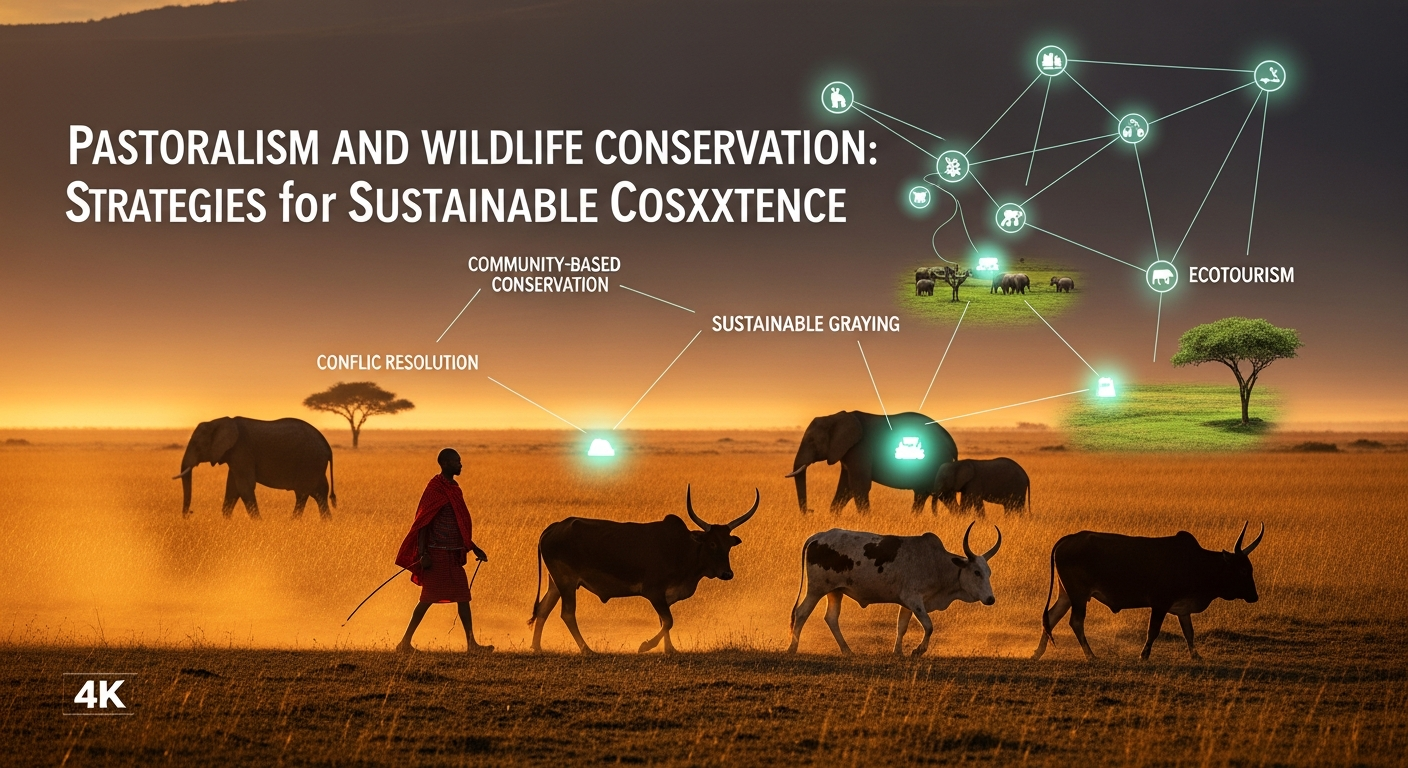
Course Title: Pastoralism and Wildlife Conservation: Strategies for Sustainable Coexistence
Executive Summary
This comprehensive two-week executive course addresses the critical interface between traditional pastoral livelihoods and wildlife conservation. Designed for professionals managing shared landscapes, the program explores strategies to mitigate human-wildlife conflict while enhancing rangeland productivity. Participants will analyze the socio-economic value of pastoralism, the ecological dynamics of arid ecosystems, and the policy frameworks necessary for community-based conservation. The curriculum bridges the gap between indigenous knowledge and modern scientific management, emphasizing practical skills in conflict resolution, land-use planning, and climate adaptation. Through case studies and interactive modules, attendees will learn to design inclusive interventions that protect biodiversity and secure rural livelihoods. Graduates will emerge equipped to foster resilience in complex socio-ecological systems, ensuring that wildlife is viewed as an asset rather than a liability to pastoral communities.
Introduction
In the vast rangelands of the world, pastoralism and wildlife conservation are inextricably linked. These landscapes, characterized by resource variability and mobility, support both domestic livestock and diverse wildlife populations. However, increasing demographic pressures, habitat fragmentation, and climate change have intensified competition for water and pasture, leading to escalating human-wildlife conflict (HWC) and land degradation. Managing these shared ecosystems requires a shift from adversarial approaches to holistic strategies that integrate conservation goals with local development needs.The *Pastoralism and Wildlife Conservation Training Course* offers a deep dive into the political ecology of rangelands. It is designed to empower conservationists, development practitioners, and policymakers with the tools to navigate the complex trade-offs inherent in mixed-use landscapes. The course moves beyond the traditional ‘fences and fines’ model, advocating for coexistence strategies that recognize the rights of local communities and the ecological necessities of wildlife. Participants will explore the role of conservancies, payment for ecosystem services, and One Health approaches in managing disease at the livestock-wildlife interface.Drawing from global best practices and regional case studies, the training emphasizes participatory planning and adaptive management. Each module combines theoretical grounding with practical application, enabling participants to develop conflict mitigation plans, sustainable grazing models, and policy briefs relevant to their specific contexts. By the end of the program, professionals will possess the confidence to lead multi-stakeholder initiatives that harmonize agricultural productivity with biodiversity conservation, ensuring a sustainable future for both people and nature.
Course Outcomes
- Analyze the ecological and socio-economic dynamics of pastoral systems in shared landscapes.
- Develop and implement effective human-wildlife conflict mitigation strategies.
- Apply participatory land-use planning tools to secure wildlife corridors and grazing rights.
- Integrate Indigenous Knowledge Systems (IKS) with scientific conservation data.
- Design One Health frameworks to manage disease risks at the wildlife-livestock interface.
- Evaluate economic models for community benefit-sharing, including ecotourism and carbon markets.
- Formulate policy recommendations that support coexistence and rangeland resilience.
Training Methodologies
- Interactive lectures by rangeland ecologists and conservation experts.
- Role-playing simulations for conflict negotiation and stakeholder management.
- Case study analysis of successful community conservancies.
- Participatory mapping exercises using GIS and spatial planning tools.
- Field-based scenarios and problem-solving workshops.
- Peer-to-peer learning and experience sharing sessions.
- Development of individual institutional action plans.
Benefits to Participants
- Acquisition of specialized skills in conflict mediation and rangeland management.
- Enhanced ability to navigate complex socio-political conservation environments.
- Access to a network of professionals in the wildlife and development sectors.
- Practical knowledge of modern technologies for wildlife monitoring and livestock protection.
- Improved capacity for grant writing and project design in conservation.
- Deeper understanding of the legal and policy frameworks governing land use.
- Professional certification enhancing career progression in environmental management.
Benefits to Sending Organization
- Reduced incidence of human-wildlife conflict in project areas.
- Improved community relations and social license to operate.
- Enhanced sustainability and resilience of conservation programs.
- Staff capable of designing evidence-based, holistic interventions.
- Better alignment with national and international biodiversity targets.
- Increased potential for accessing climate finance and conservation funding.
- Strengthened institutional capacity for cross-sectoral collaboration.
Target Participants
- Wildlife Wardens and Conservation Managers.
- Community Liaison Officers and Social Development Specialists.
- Rangeland Ecologists and Livestock Extension Officers.
- Policy Analysts in Environmental Ministries.
- NGO Program Managers focusing on rural livelihoods.
- Local Government Planners and Land Officers.
- Researchers and Academics in Natural Resource Management.
WEEK 1: WEEK 1: Foundations of Rangeland Ecology and Conflict Dynamics
Module 1 – Pastoral Systems and Rangeland Ecology
- History and evolution of pastoralism as a production system.
- Ecological dynamics of arid and semi-arid lands.
- Mobility as a strategy for resource access and resilience.
- The role of livestock in rangeland biodiversity maintenance.
- Traditional governance structures and grazing management.
- Threats to pastoral livelihoods: sedenterization and fragmentation.
- Valuing the economic contribution of pastoralism.
Module 2 – Wildlife Ecology in Shared Landscapes
- Wildlife population dynamics and carrying capacity.
- Migration patterns and seasonal habitat requirements.
- Dietary overlap and competition between livestock and wildlife.
- Keystone species and their impact on ecosystem health.
- Impact of fencing and infrastructure on wildlife movement.
- Biodiversity hotspots outside protected areas.
- Monitoring techniques: from spoor tracking to telemetry.
Module 3 – The Human-Wildlife Conflict (HWC) Nexus
- Typology of conflicts: crop raiding, predation, and competition.
- Drivers of conflict: climate change, encroachment, and population growth.
- Psychological and social impacts of HWC on communities.
- Retaliatory killings and their impact on conservation status.
- Analysis of compensation and insurance schemes.
- Barriers to effective conflict resolution.
- Case studies of high-conflict zones.
Module 4 – Governance, Land Tenure, and Rights
- Land tenure systems: communal, private, and state land.
- Legal frameworks governing wildlife usage and conservation.
- The tragedy of the commons vs. common pool resource management.
- Securing land rights for pastoral communities.
- Governance of wildlife corridors and dispersal areas.
- The role of traditional institutions in dispute resolution.
- Gender dimensions in natural resource governance.
Module 5 – Climate Change and Adaptation Strategies
- Impact of climate change on rangeland productivity.
- Drought cycles and coping mechanisms for pastoralists.
- Water resource management in water-scarce environments.
- Early warning systems and disaster risk reduction.
- Ecosystem-based adaptation approaches.
- Restoring degraded rangelands: techniques and challenges.
- Building resilience through livelihood diversification.
WEEK 2: WEEK 2: Strategies for Coexistence, Management, and Policy
Module 6 – Community-Based Natural Resource Management (CBNRM)
- Principles and evolution of CBNRM.
- Designing and managing community conservancies.
- Benefit-sharing mechanisms and equity issues.
- Strengthening local institutions for conservation governance.
- Public-Private-Community Partnerships (PPCP).
- Integrating traditional knowledge with formal management.
- Success stories and lessons learned from the region.
Module 7 – One Health: The Wildlife-Livestock-Human Interface
- Understanding zoonotic diseases and transmission vectors.
- Disease risks at the livestock-wildlife interface (e.g., FMD, Anthrax).
- The One Health approach to disease surveillance and control.
- Veterinary interventions and community animal health workers.
- Impact of disease on trade and wildlife tourism.
- Hygiene and food safety in pastoral value chains.
- Collaborative cross-sectoral health planning.
Module 8 – Economic Incentives and Markets
- Developing sustainable wildlife tourism models.
- Livestock marketing and value chain improvements.
- Payment for Ecosystem Services (PES) and carbon credits.
- Certification schemes for ‘Wildlife-Friendly’ products.
- Micro-enterprise development for livelihood diversification.
- Conservation trust funds and sustainable financing.
- Reducing economic dependence on a single resource.
Module 9 – Mitigation Technologies and Participatory Planning
- Predator-proof bomas and livestock protection enclosures.
- Non-lethal deterrents: light systems, noise, and chilli fences.
- Use of technology: GPS collars, drones, and camera traps.
- Participatory Rural Appraisal (PRA) for conservation planning.
- Zoning and land-use planning workshops.
- Community scouting and ranger operations.
- Data collection and citizen science.
Module 10 – Policy Formulation and Strategic Action
- Gap analysis of current conservation policies.
- Advocacy strategies for pastoralist rights.
- Drafting policy briefs for mixed-use landscapes.
- International conventions (CBD, UNCCD) and local application.
- Monitoring and Evaluation (M&E) of conservation projects.
- Synthesizing course learnings into institutional strategies.
- Presentation of individual/group Capstone Action Plans.
Action Plan for Implementation
- Conduct a baseline assessment of HWC and rangeland health in the target area.
- Map key stakeholders and establish a multi-sectoral working group.
- Develop a participatory land-use plan identifying grazing zones and wildlife corridors.
- Pilot specific conflict mitigation tools (e.g., predator-proof bomas) in high-risk hotspots.
- Implement a community scout monitoring system for early warning.
- Establish a transparent benefit-sharing mechanism for conservation revenues.
- Review progress quarterly and adapt strategies based on monitoring data.
Course Features
- Lecture 0
- Quiz 0
- Skill level All levels
- Students 0
- Certificate No
- Assessments Self

You May Like

Advanced Population Ecology and Demographics
Course Title: Advanced Population Ecology and Demographics Executive Summary This intensive two-week course on Advanced Population Ecology and Demographics equips participants with advanced quantitative and...

Applied Conservation Genetics for Species Management
Course Title: Applied Conservation Genetics for Species Management Executive Summary This two-week intensive course on Applied Conservation Genetics for Species Management bridges the gap between...

Threatened Species Recovery and Reintroduction Programs
Course Title: Threatened Species Recovery and Reintroduction Programs Executive Summary This intensive two-week course provides a comprehensive framework for designing, implementing, and managing recovery plans...

Landscape Ecology and Connectivity Science Training Course
Course Title: Landscape Ecology and Connectivity Science Training Course Executive Summary This intensive two-week executive course on Landscape Ecology and Connectivity Science is designed to...

Biodiversity Hotspot Conservation and Management
Course Title: Biodiversity Hotspot Conservation and Management Executive Summary This intensive two-week course on Biodiversity Hotspot Conservation and Management equips participants with the knowledge and...




