
Disaster Management for Wildlife Conservation Professionals
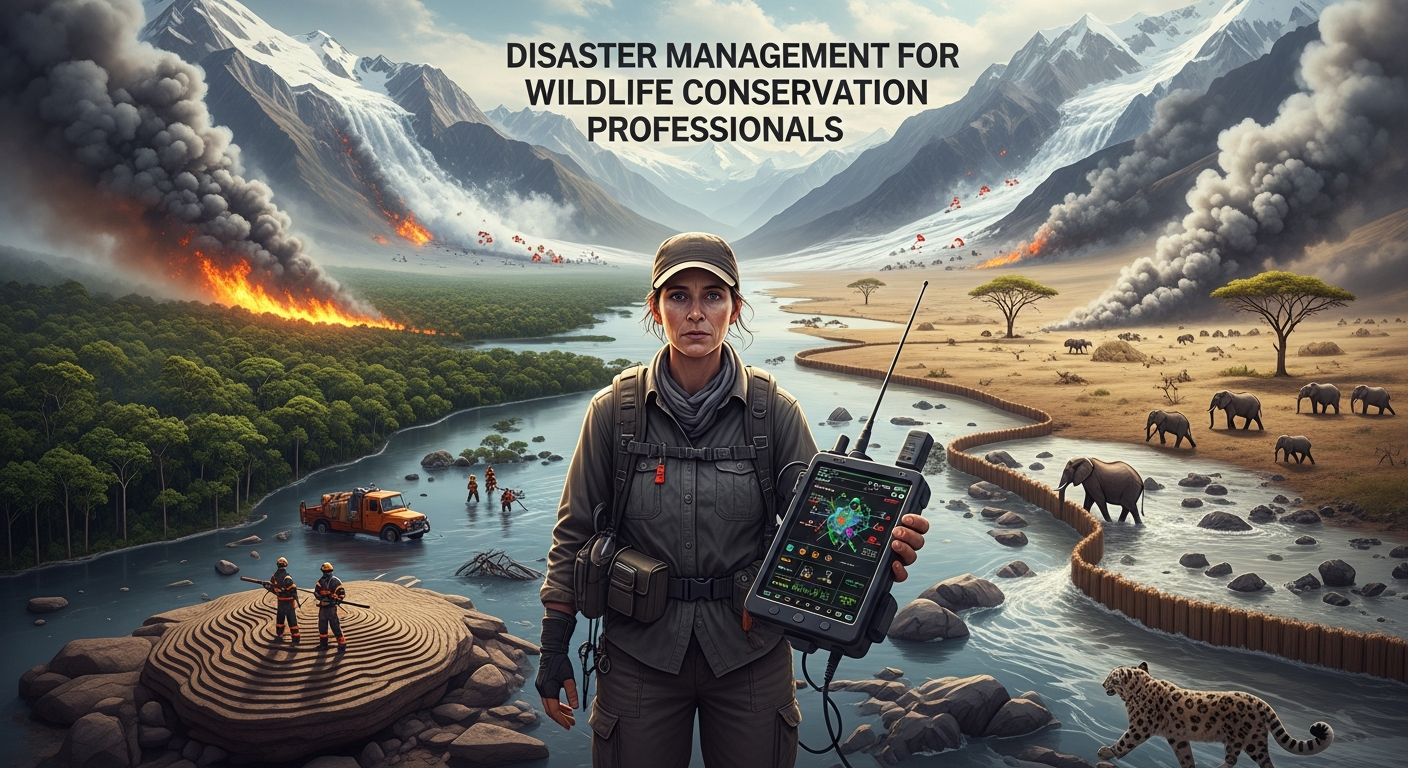
Course Title: Disaster Management for Wildlife Conservation Professionals
Executive Summary
This two-week course equips wildlife conservation professionals with essential skills to manage disasters impacting wildlife and their habitats. Participants will learn disaster preparedness, response, and mitigation strategies tailored to unique ecological challenges. The program covers risk assessment, emergency protocols, wildlife rescue techniques, habitat restoration, and community engagement. Through case studies, simulations, and expert lectures, professionals will enhance their ability to protect vulnerable species and ecosystems during natural or human-induced disasters. Emphasis is placed on interagency collaboration, resource management, and long-term recovery planning. Upon completion, participants will be prepared to lead disaster response efforts, minimizing ecological damage and ensuring the resilience of wildlife populations.
Introduction
Wildlife populations and their habitats are increasingly vulnerable to a wide range of disasters, including natural events like wildfires, floods, and hurricanes, as well as human-induced incidents such as oil spills and industrial accidents. Effective disaster management is crucial for mitigating the impact of these events on wildlife and ensuring the long-term health and stability of ecosystems. This course provides wildlife conservation professionals with the knowledge, skills, and tools necessary to prepare for, respond to, and recover from disasters affecting wildlife. It emphasizes a proactive approach, focusing on risk assessment, planning, and collaboration to minimize the ecological consequences of disasters and promote the resilience of wildlife populations. The course integrates scientific principles, practical techniques, and real-world case studies to provide a comprehensive understanding of disaster management in the context of wildlife conservation.
Course Outcomes
- Develop comprehensive disaster preparedness plans for wildlife conservation areas.
- Implement effective wildlife rescue and rehabilitation techniques during emergencies.
- Assess and mitigate the impact of disasters on wildlife habitats.
- Collaborate effectively with interagency partners during disaster response efforts.
- Manage resources and logistics efficiently in disaster situations.
- Conduct post-disaster assessments to inform recovery and restoration strategies.
- Engage local communities in disaster preparedness and response activities.
Training Methodologies
- Interactive lectures and presentations by expert instructors.
- Case study analysis of real-world disaster events.
- Hands-on workshops and field exercises simulating disaster scenarios.
- Group discussions and brainstorming sessions to foster collaborative problem-solving.
- Development of individual disaster management plans tailored to specific conservation areas.
- Use of online resources and simulation software to enhance learning.
- Guest lectures from experienced disaster response professionals.
Benefits to Participants
- Enhanced skills in disaster preparedness, response, and mitigation for wildlife conservation.
- Improved ability to assess and manage risks to wildlife populations and habitats.
- Increased confidence in leading disaster response efforts.
- Expanded professional network through collaboration with other conservation professionals.
- Greater understanding of interagency coordination and resource management in disaster situations.
- Professional development and certification in disaster management for wildlife conservation.
- Improved career prospects in the field of wildlife conservation and disaster management.
Benefits to Sending Organization
- Improved capacity to protect wildlife and habitats from disaster impacts.
- Reduced financial losses and ecological damage associated with disaster events.
- Enhanced organizational reputation and credibility through effective disaster response.
- Strengthened partnerships with other agencies and organizations involved in disaster management.
- Increased staff expertise and readiness to respond to emergencies.
- Compliance with legal and regulatory requirements for disaster preparedness.
- Improved resilience of wildlife populations and ecosystems to future disasters.
Target Participants
- Wildlife Biologists
- Conservation Managers
- Park Rangers
- Veterinarians
- Ecologists
- Environmental Scientists
- Disaster Response Coordinators
WEEK 1: Foundations of Disaster Management for Wildlife
Module 1: Introduction to Disaster Management Concepts
- Defining Disasters and their Impact on Wildlife.
- The Disaster Management Cycle: Preparedness, Response, Recovery, Mitigation.
- Risk Assessment and Vulnerability Analysis for Wildlife Populations.
- Legal and Regulatory Frameworks for Disaster Management.
- Ethical Considerations in Wildlife Disaster Response.
- Case Studies: Past Disasters and Lessons Learned.
- Overview of International Disaster Management Standards.
Module 2: Disaster Preparedness Planning for Wildlife
- Developing a Wildlife Disaster Preparedness Plan.
- Identifying Potential Hazards and Risks.
- Establishing Communication and Coordination Protocols.
- Resource Inventory and Mobilization Strategies.
- Training and Capacity Building for Disaster Response Teams.
- Community Engagement and Public Awareness Campaigns.
- Simulation Exercise: Developing a Disaster Preparedness Scenario.
Module 3: Wildlife Rescue and Rehabilitation Techniques
- Safe Capture and Handling of Injured Wildlife.
- Basic Veterinary Care and First Aid for Wildlife.
- Establishing Temporary Wildlife Rehabilitation Centers.
- Transporting Injured Wildlife to Treatment Facilities.
- Disease Prevention and Biosecurity Measures.
- Rehabilitation Protocols for Different Wildlife Species.
- Ethical Considerations in Wildlife Rehabilitation.
Module 4: Habitat Assessment and Protection
- Assessing the Impact of Disasters on Wildlife Habitats.
- Identifying Critical Habitats and Ecosystem Services.
- Implementing Emergency Habitat Protection Measures.
- Controlling Invasive Species after Disasters.
- Restoring Damaged Habitats and Ecosystems.
- Monitoring Habitat Recovery and Biodiversity.
- Case Study: Habitat Restoration after a Wildfire.
Module 5: Interagency Collaboration and Coordination
- Building Partnerships with Government Agencies, NGOs, and Local Communities.
- Establishing a Unified Command Structure for Disaster Response.
- Coordinating Resource Allocation and Logistics.
- Sharing Information and Best Practices.
- Resolving Conflicts and Ensuring Effective Communication.
- Developing Joint Disaster Response Plans.
- Simulation Exercise: Multi-Agency Disaster Response Scenario.
WEEK 2: Advanced Disaster Management Strategies and Long-Term Recovery
Module 6: Advanced Wildlife Rescue Techniques
- Advanced Capture and Restraint Methods for Difficult Wildlife Species.
- Specialized Veterinary Care for Critically Injured Wildlife.
- Managing Mass Casualty Events Involving Wildlife.
- Use of Technology in Wildlife Rescue and Monitoring.
- Remote Sensing and GIS for Wildlife Tracking.
- Drone Technology for Assessing Disaster Impacts.
- Case Study: Rescue Operations during a Flood.
Module 7: Disaster Mitigation and Prevention Strategies
- Identifying and Addressing the Root Causes of Disasters.
- Implementing Land Use Planning and Zoning Regulations.
- Developing Early Warning Systems for Natural Disasters.
- Promoting Sustainable Resource Management Practices.
- Climate Change Adaptation Strategies for Wildlife Conservation.
- Building Community Resilience to Disasters.
- Case Study: Wildfire Prevention Strategies.
Module 8: Post-Disaster Assessment and Recovery Planning
- Conducting Comprehensive Post-Disaster Assessments.
- Evaluating the Effectiveness of Disaster Response Efforts.
- Identifying Lessons Learned and Best Practices.
- Developing Long-Term Recovery Plans for Wildlife and Habitats.
- Securing Funding and Resources for Recovery Projects.
- Monitoring the Progress of Recovery Efforts.
- Case Study: Long-Term Recovery after an Oil Spill.
Module 9: Community Engagement and Education
- Engaging Local Communities in Disaster Preparedness Activities.
- Developing Educational Materials and Outreach Programs.
- Training Community Members in Basic Disaster Response Skills.
- Promoting Citizen Science Initiatives for Wildlife Monitoring.
- Building Trust and Collaboration with Local Stakeholders.
- Addressing Community Needs and Concerns.
- Case Study: Community-Based Disaster Preparedness Program.
Module 10: Future Trends in Disaster Management
- Emerging Technologies for Disaster Response.
- The Role of Artificial Intelligence in Disaster Management.
- Predictive Modeling and Early Warning Systems.
- The Impact of Climate Change on Disaster Frequency and Intensity.
- The Importance of Ecosystem-Based Disaster Risk Reduction.
- Building a More Resilient Future for Wildlife and Communities.
- Final Project Presentations and Course Wrap-Up.
Action Plan for Implementation
- Conduct a comprehensive risk assessment for your area of responsibility.
- Develop or update your existing wildlife disaster preparedness plan.
- Establish communication protocols with relevant agencies and stakeholders.
- Organize training for your staff on disaster response procedures.
- Secure necessary equipment and resources for disaster response.
- Conduct regular drills and simulations to test your plan.
- Evaluate and update your plan based on lessons learned from drills and real-world events.
Course Features
- Lecture 0
- Quiz 0
- Skill level All levels
- Students 0
- Certificate No
- Assessments Self

You May Like

Advanced Population Ecology and Demographics
Course Title: Advanced Population Ecology and Demographics Executive Summary This intensive two-week course on Advanced Population Ecology and Demographics equips participants with advanced quantitative and...

Applied Conservation Genetics for Species Management
Course Title: Applied Conservation Genetics for Species Management Executive Summary This two-week intensive course on Applied Conservation Genetics for Species Management bridges the gap between...

Threatened Species Recovery and Reintroduction Programs
Course Title: Threatened Species Recovery and Reintroduction Programs Executive Summary This intensive two-week course provides a comprehensive framework for designing, implementing, and managing recovery plans...

Landscape Ecology and Connectivity Science Training Course
Course Title: Landscape Ecology and Connectivity Science Training Course Executive Summary This intensive two-week executive course on Landscape Ecology and Connectivity Science is designed to...

Biodiversity Hotspot Conservation and Management
Course Title: Biodiversity Hotspot Conservation and Management Executive Summary This intensive two-week course on Biodiversity Hotspot Conservation and Management equips participants with the knowledge and...




