
Training Course on Power Electronics for Renewable Energy Systems
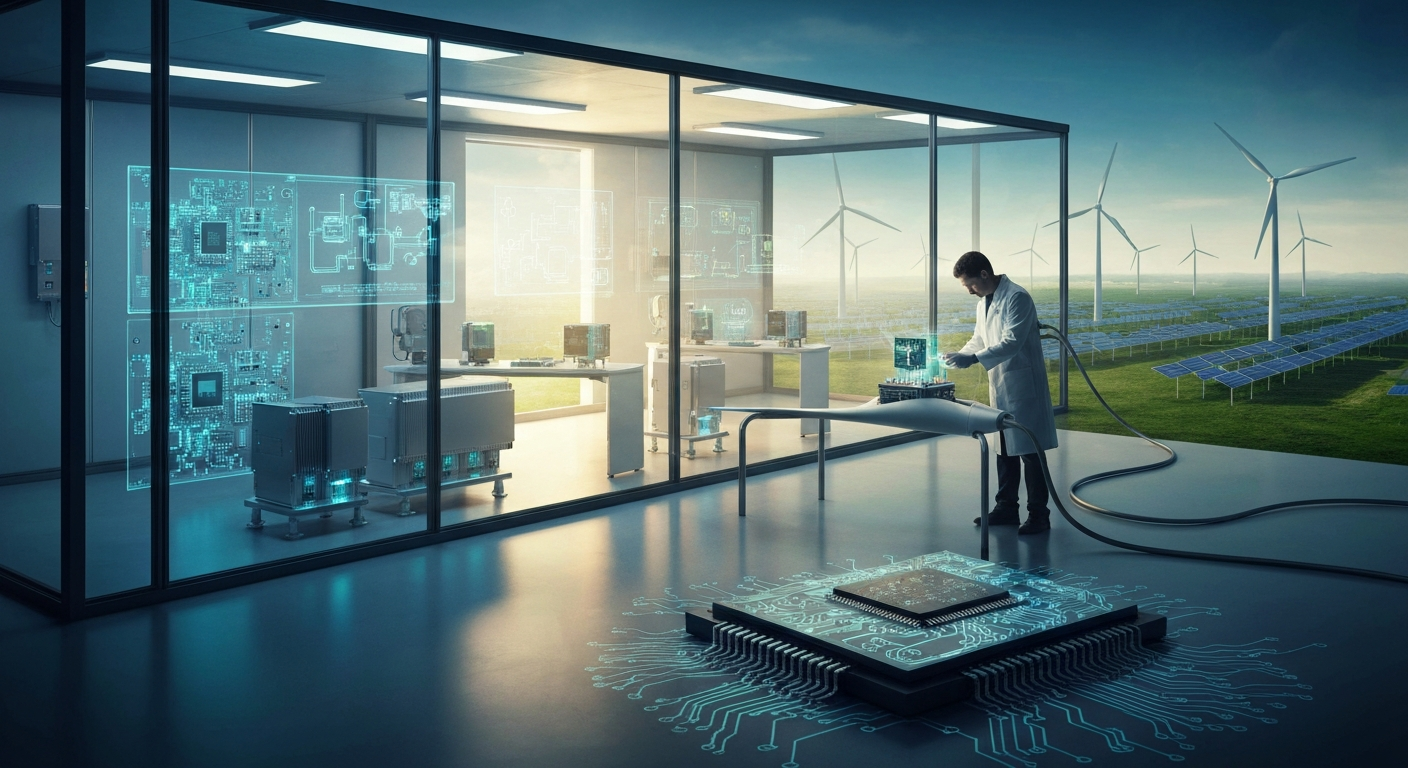
Course Title: Training Course on Power Electronics for Renewable Energy Systems
Executive Summary
This intensive two-week course provides a comprehensive understanding of power electronics and its critical role in renewable energy systems. Participants will gain insights into the design, control, and application of power electronic converters in various renewable energy sources such as solar, wind, and energy storage. The course covers fundamental concepts, advanced control techniques, grid integration challenges, and emerging technologies. Through hands-on simulations, case studies, and practical exercises, attendees will develop the skills necessary to analyze, design, and optimize power electronic systems for enhanced efficiency, reliability, and grid compatibility in renewable energy applications. This course is designed for engineers, researchers, and professionals aiming to advance their knowledge and contribute to the sustainable energy transition.
Introduction
The rapid growth of renewable energy sources necessitates advanced power electronic technologies to efficiently convert, control, and integrate these resources into the power grid. Power electronics serves as the essential interface between renewable energy systems and the grid, playing a crucial role in maximizing energy capture, ensuring grid stability, and improving overall system performance. This course offers a comprehensive overview of power electronics in the context of renewable energy, covering a wide range of topics from basic converter topologies to advanced control algorithms and grid integration techniques. Participants will explore the specific challenges and solutions associated with different renewable energy sources, gaining a deep understanding of how power electronics enables the reliable and efficient utilization of clean energy. This program is designed to equip professionals with the knowledge and skills to contribute to the development and deployment of innovative power electronic solutions for a sustainable energy future.
Course Outcomes
- Understand the fundamental principles of power electronics and their applications in renewable energy systems.
- Analyze and design power electronic converters for various renewable energy sources.
- Develop control strategies for efficient and stable operation of power electronic systems.
- Evaluate the impact of power electronic systems on grid stability and power quality.
- Apply simulation tools for modeling and analyzing power electronic circuits and systems.
- Identify and address the challenges of grid integration for renewable energy sources.
- Explore emerging trends and technologies in power electronics for renewable energy.
Training Methodologies
- Interactive lectures and discussions.
- Case study analysis of real-world renewable energy projects.
- Hands-on simulation using industry-standard software.
- Group exercises and problem-solving sessions.
- Laboratory experiments and demonstrations.
- Guest lectures from industry experts.
- Project-based learning and presentations.
Benefits to Participants
- Gain in-depth knowledge of power electronics for renewable energy applications.
- Develop practical skills in designing, analyzing, and controlling power electronic systems.
- Enhance problem-solving abilities in renewable energy grid integration.
- Improve understanding of emerging trends and technologies in the field.
- Expand professional network through interaction with industry experts and peers.
- Receive a certificate of completion to enhance career prospects.
- Acquire valuable resources and tools for continued learning and development.
Benefits to Sending Organization
- Enhanced employee competence in power electronics for renewable energy systems.
- Improved ability to design and implement efficient renewable energy solutions.
- Increased competitiveness in the renewable energy market.
- Enhanced grid integration capabilities for renewable energy projects.
- Reduced costs through optimized system design and control.
- Greater ability to innovate and develop new renewable energy technologies.
- Improved sustainability performance and environmental responsibility.
Target Participants
- Electrical Engineers.
- Renewable Energy Engineers.
- Power Systems Engineers.
- Control Systems Engineers.
- Researchers in Renewable Energy.
- Project Managers in Renewable Energy.
- Energy Consultants and Policy Makers.
WEEK 1: Fundamentals of Power Electronics for Renewable Energy
Module 1: Introduction to Power Electronics
- Overview of Power Electronics.
- Applications in Renewable Energy Systems.
- Power Semiconductor Devices (Diodes, Thyristors, MOSFETs, IGBTs).
- Switching Characteristics and Losses.
- Basic Converter Topologies (AC-DC, DC-DC, DC-AC, AC-AC).
- Modulation Techniques (PWM, Space Vector Modulation).
- Introduction to Simulation Tools (MATLAB/Simulink, PSIM).
Module 2: DC-DC Converters
- Buck Converter: Operation and Analysis.
- Boost Converter: Operation and Analysis.
- Buck-Boost Converter: Operation and Analysis.
- Cuk Converter: Operation and Analysis.
- Isolated DC-DC Converters (Flyback, Forward).
- Control Strategies for DC-DC Converters.
- Design Considerations for DC-DC Converters.
Module 3: DC-AC Inverters
- Single-Phase Inverters: Operation and Analysis.
- Three-Phase Inverters: Operation and Analysis.
- Voltage Source Inverters (VSI).
- Current Source Inverters (CSI).
- Pulse Width Modulation (PWM) Techniques.
- Harmonic Reduction Techniques.
- Grid Synchronization and Control.
Module 4: Power Electronics in Solar Energy Systems
- Photovoltaic (PV) Cell Characteristics.
- Maximum Power Point Tracking (MPPT) Algorithms.
- DC-DC Converters for PV Systems.
- DC-AC Inverters for PV Systems.
- Grid-Connected PV Systems.
- Stand-Alone PV Systems.
- Design and Simulation of PV Systems.
Module 5: Power Electronics in Wind Energy Systems
- Wind Turbine Characteristics.
- Wind Turbine Control Strategies.
- Power Electronic Converters for Wind Turbines.
- Doubly-Fed Induction Generator (DFIG) Systems.
- Permanent Magnet Synchronous Generator (PMSG) Systems.
- Grid Integration of Wind Energy.
- Design and Simulation of Wind Energy Systems.
WEEK 2: Advanced Topics and Applications
Module 6: Grid Integration of Renewable Energy
- Grid Codes and Standards.
- Power Quality Issues (Harmonics, Voltage Fluctuations).
- Reactive Power Compensation.
- Active Power Control.
- Frequency Control.
- Fault Ride-Through (FRT) Capability.
- Smart Grid Technologies.
Module 7: Energy Storage Systems
- Battery Energy Storage Systems (BESS).
- Supercapacitor Energy Storage Systems.
- Flywheel Energy Storage Systems.
- Pumped Hydro Energy Storage.
- Power Electronic Interfaces for Energy Storage.
- Control Strategies for Energy Storage Systems.
- Applications in Renewable Energy Systems.
Module 8: Advanced Control Techniques
- Digital Control Systems.
- Sliding Mode Control.
- Model Predictive Control.
- Adaptive Control.
- Artificial Intelligence (AI) in Power Electronics.
- Machine Learning (ML) for Renewable Energy.
- Real-Time Control Implementation.
Module 9: Power Electronics for Electric Vehicles
- Electric Vehicle (EV) Architectures.
- Battery Chargers for EVs.
- DC-DC Converters for EVs.
- DC-AC Inverters for EVs.
- Electric Motor Drives for EVs.
- Vehicle-to-Grid (V2G) Technology.
- Wireless Power Transfer for EVs.
Module 10: Emerging Trends and Technologies
- Wide Bandgap (WBG) Semiconductors (SiC, GaN).
- Modular Multilevel Converters (MMC).
- Solid-State Transformers (SST).
- Microgrids and DC Grids.
- Power Electronics Packaging and Thermal Management.
- Reliability and Fault Diagnosis.
- Future Directions in Power Electronics for Renewable Energy.
Action Plan for Implementation
- Conduct a needs assessment to identify specific areas for improvement in power electronics for renewable energy within your organization.
- Develop a detailed training plan based on the course content and identified needs.
- Implement the training plan through internal workshops, online courses, or external training programs.
- Apply the learned concepts and skills to real-world renewable energy projects within the organization.
- Monitor the performance and impact of the training program through key performance indicators (KPIs).
- Share the knowledge and best practices with colleagues and stakeholders.
- Continuously update the training program to reflect the latest advancements in power electronics for renewable energy.
Course Features
- Lecture 0
- Quiz 0
- Skill level All levels
- Students 0
- Certificate No
- Assessments Self

You May Like

Advanced Population Ecology and Demographics
Course Title: Advanced Population Ecology and Demographics Executive Summary This intensive two-week course on Advanced Population Ecology and Demographics equips participants with advanced quantitative and...

Applied Conservation Genetics for Species Management
Course Title: Applied Conservation Genetics for Species Management Executive Summary This two-week intensive course on Applied Conservation Genetics for Species Management bridges the gap between...

Threatened Species Recovery and Reintroduction Programs
Course Title: Threatened Species Recovery and Reintroduction Programs Executive Summary This intensive two-week course provides a comprehensive framework for designing, implementing, and managing recovery plans...

Landscape Ecology and Connectivity Science Training Course
Course Title: Landscape Ecology and Connectivity Science Training Course Executive Summary This intensive two-week executive course on Landscape Ecology and Connectivity Science is designed to...

Biodiversity Hotspot Conservation and Management
Course Title: Biodiversity Hotspot Conservation and Management Executive Summary This intensive two-week course on Biodiversity Hotspot Conservation and Management equips participants with the knowledge and...




